Sound Quality, Audiology, Musicology, Physiology
Below is a small sample. Our Blogs contain much more.
"I was delighted to find this. You guys are scientists and spiritualists. Kudos!"
"Simplicity is a great virtue but it requires hard work to achieve it and education to appreciate it. And, to make matters worse: complexity sells better." -- Edsger W. Dijkstra
UnSpun 124 – Dr. Hans Utter: "Music and Transformation: Self, Society, and Cybernetics" -- FANTASTIC
"Perfect" human hearing spans frequencies 20 Hertz to 20 kiloHertz, a range of 11 octaves and larger than any musical instrument. It is also finely sensitive to air pressure modulations over many orders of magnitude, from as minute as 20 micropascals (the "noise of silence") to over 150 deciBels (a jet engine at 100 feet). Hearing is our most perceptive sense by far. At least one-third of the human brain is related in some way to sound perception or creation. Sound is intrinsic with life.
Sufficiently advanced technology is indistinguishable from magic.
"We are what we repeatedly do. Excellence, then, is not an act, but habit." ~Aristotle
"If you want to find the secrets of the universe, think in terms of energy, frequency and vibration." - Nikola Tesla
"...music seems to be the most immediate of all the arts...Music possesses us...it really is as if some 'other' has entered not just our bodies but our intentions, taking us over." - Robert Jourdain, MUSIC, THE BRAIN AND ECSTASY (1997), p 328
"Music directly represents the passions of states of the soul - gentleness, anger, courage, temperance...if one listens to the wrong kind of music he will become the wrong kind of person..." - ARISTOTLE, Politics, 8, 1340
"...through foolishness they, the people, deceived themselves into thinking that there was no right or wrong in music, that it was to be judged good or bad by the pleasure it gave...a spirit of law breaking." - The Laws of Plato, Vol III, Univ. Chicago Press, 700c 1980 p 86
"If one should desire to know whether a kingdom is well-governed, if its morals are good or bad, the quality of its music will furnish the answer." - Confucius
"The introduction of a new kind of music must be shunned as imperilling the whole state." - PLATO, REPUBLIC
"Music is the mediator between intellectual and sensuous life...the one spiritual entrance into the higher world." - Ludwig van Beethoven
"Modern art is largely a matter of deformaties. Modern music is a matter of deformaties, but we have grown so accustomed to it that we assume that these deformaties are normal. They are not." - Manly P. Hall, video
"...[Oliver Heaviside] was a first-rate oddity. He was always half-ready to eat out of garbage cans. Basically...part of the reason why he died was that the neighbor kids stoned him with rocks, everyday. So he couldn't get out of his house. So Heaviside got to meet, like everyone else, the wonderful world of electrical study. If you go through all these inventors, you find out that electrical study really is the tale of Prometheus. You will be rewarded - ha! - the eagle will peck your liver, until you die. So, (chuckles) that is the way it works with the world of electrical study. It is not a business I recommend anyone getting into..." Eric Dollard
Added and updated fervently, all materials are presented in fair use for research and educational purposes. To prevent unrestricted dissemination of certain copyrighted materials, login may be required for access. Items posted are for educational and research purposes and do not necessarily represent our viewpoint. Don't overlook the Audiology Musicology Blog which also contains much quality information; newer materials usually appear in the blog before being added below.
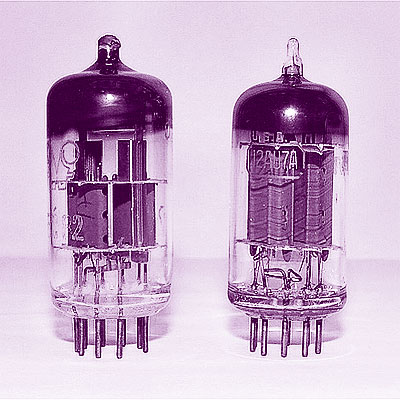
- Tubes vs Transistors - Is There An Audible Difference? ( PDF ) by Russell O. Hamm, Journal of the Audio Engineering Society, Sep. 1972: "...amplifiers are often severely overloaded by signal transients (THD 30%). Under this condition there is a major difference in the harmonic distortion components of the amplified signal..."
- Tubes vs Transistors - Perception of Loudness, Clarity, Distortion, Sound Quality
- Tubes vs Transistors In Electric Guitar Amps ( PDF ) by W. Stephen Bussey, Robert M. Haigler, Proceedings of the IEEE, Ch. 1610, May, 1981
-
Tubes vs Transformers - What good tube "tone" looks like - An examination into the esoterica shrouding audio output transformers, tubes and "tone", or the various unpleasant effects of bulky metal on faithful amplification.
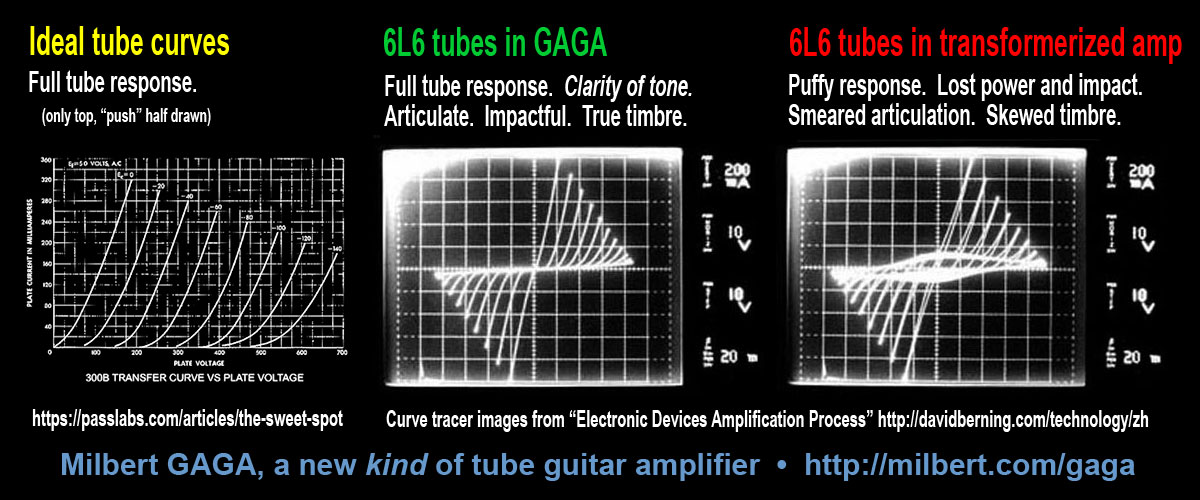
- The Cool Sound of Tubes by Eric Barbour & IEEE
- Transistors vs Tubes - Feature Comparison adapted from IEEE & Eric Barbour
-
Truth In Car "Tube" Amp Designs - A Schematic Comparison: "A tube bracketed by semiconductors does not nearly comprise a true tube amp."

-
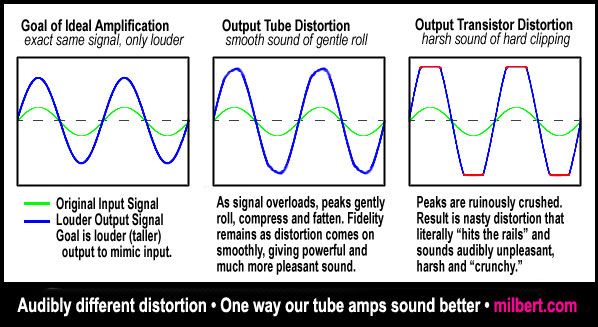
- Tubes overload and compress comparatively gently, while transistors tend to abruptly clip as they "crash hard into the rails." A guitarist might explain: "At overload, tubes squish and transistors crunch." With several parallels, tubes can be thought of in terms of warm, incandescent light versus transistors as harsh fluorescent light. Not as a rule but generally, transistors make great "digital" switches with hard electrical edges, while tubes are inherently more "analog" and smooth. While some people insist that physical differences are not audible, internally, tubes are mostly vacuum, with a "space charge" or electron cloud that is electrostatically controlled by a varying voltage on a metal grid. Transistors are mostly resistive silicon, purposefully contaminated with impurities to enable conductivity in their crystalline lattice that otherwise insulates.
- Tubes use a charged electron plasma cloud in vacuum (see space charge), while transistors force audio signal current through something not unlike dirty sand --possibly why 'brittle, hard, sharp, gritty and scratchy' often describe "transistor sound" [April 2012, years after writing this we discovered Alexander Dumble concurs.]. Whereas rather linear tube circuits are usually simple, most transistor circuits require high negative feedback and more complexity. The All American Five was for decades a popular and common radio, requiring only five tubes. "Transistorization" happened for economy, not better sound --in this case, cheaper was just cheaper. In terms of gracefulness, straightforward simplicity and perhaps ultimately sound quality, transistors fall short. See also How Does a Transistor Work. Listen from 3:15 into interview with Preston Nichols (Montauk / Philadelphia Experiment), regarding otherworldliness of electrons in a vacuum tube: 'In vacuum tubes... an electron is a particle and a wave, just like a photon is... electron in a vacuum becomes and operates as a wave... different set of properties for vacuum-conducted (wave) electron versus metal-conducted (particle) electrons... vacuum tubes hit the spiritual level... electrons are moving into another reality... electrons in a vacuum approach god / godliness.'
- "We have called it the Transistor, T-R-A-N-S-I-S-T-O-R, because it is a resistor or semiconductor device which can amplify electrical signals as they are transferred through it from input to output terminals. It is, if you will, the electrical equivalent of a vacuum tube amplifier. But there the similarity ceases. It has no vacuum, no filament, no glass tube. It is composed entirely of cold, solid substances..." - Ralph Bown, Bell Laboratories, upon publicly introducing the transistor in 1947, only a few months after the peculiar Roswell incident (See also David Flynn on video and Maurice Cotterell on video). See also this about NITINOL memory metal and other interesting items. This is relevant: "In his book, The Sea of Energy in Which the Earth Floats, Moray presents documented evidence that he invented the first transistor-type valve in 1925, far ahead of the of officially recognized discovery of the transistor. In his free energy detector tube Moray apparently used, inside the tube itself, a variation of this transistor idea - a small rounded pellet of a mixture of triboluminescent zinc, a semiconductor material, and a radioactive or fissile material. His patent application (for which a patent has never been granted) was filed on July 13, 1931, long before the advent of the Bell Laboratories' transistor." Tom Bearden. See also and the works of researcher David Flynn.
From here -- "Tubes vs. transistors & quantization distortion: After reading an article in a 1987 issue of Discover magazine about the popularity of tube amps I decided to try building one using TV tubes and then later, HiFi tubes... Before this I was experimenting with solid state audio circuits and tubes seemed to give me what I was looking for. One day while pondering the tube vs. transistor sound mystery I tried visualizing the inner workings of tubes and transistors. With tubes, amplification seems to take place (almost) entirely in a vacuum and classical electromagnetic theory seems adequate to explain most of it. With transistors you basically have to start with quantum mechanics to explain how they work. An idea came to me, could it be possible that solid state electronics produce a kind of quantization or quantizing error distortion because of their quantum mechanical nature? It seemed to me solid state sound had an unnatural characteristic similar to the digital sound from CDs. I wrote to Ed Dell in 1990, Amateur Audio Publications, Inc. editor, about this idea and he published my letter, in Glass Audio magazine and he wrote back and told me about some publications by Malcolm Hawksford about some work on "the molecular and atomic activity within solid state devices as well as work on quantizing problems". I looked through some books in the library about transistors and didn't find much that would lead me to the answer. I did find something about traps in semiconductors and a graph that had steps in the audio region, but don't know if that's related or not. After finding Ed Dell's 1990 letter recently while looking through some old papers, I decided to look on the internet to see if there are any articles by Hawksford available. I found a site with a collection of them and one article of his which discusses quantizing distortion in transistors. Looking through the equations, it appears to me that it doesn't have anything directly related to quantum mechanics in them. The website is http://www.essex.ac.uk/csee/research/audio_lab/malcolms_publications.html"
- It is interesting that some reports of recovered UFO technology mention semiconductors, and the work of Henry Moray indicates use of semiconductors in energy reception. Is it possible the widespread use of semiconductor amplification is the result of insufficient understanding, or perhaps a path ingeniously misdirected long ago?
- Preston Nichols (re: Philadelphia Experiment, Montauk, Time Travel, Hyper-physics) offers some insight into the "spiritual" magic of vacuum tubes in this interview. Electrons as sheets of waves in a vacuum, versus compartmentalization in semiconductive impure solid crystal. Electromagnetism as God; an infinite musical note; high-power, high-frequency, high-intelligence. BorriAudio comment: "I remember when Preston came into my store which was on the curve between Cairo and Freehold, and talked to me for an hour about sound recording. ... We not only talked about quantum wells in the vacuum tubes, but how Edison cylinders, with the vertical recording method, records more than just sound!"
- "The scientists from Franklin to Morse were clear thinkers and did not produce erroneous theories. The scientists of today think deeply instead of clearly. One must be sane to think clearly, but one can think deeply and be quite insane. Today's scientists have substituted mathematics for experiments and they wander off through equation after equation and eventually build a structure which has no relation to reality." - Nikola Tesla
- Electron Movement through Solids - Energy Bands and Semiconductors - http://youtube.com/watch?v=KYYWZhsgVPc -- Materials vary greatly in their ability to conduct electron flow. A digitalization may take place that has bearing on sound quality and overall performance, fidelity and response.
- Audio Equipment Venn Diagram - Found here, by user "Justin Zazzi". We would add another dimension called "Sound Quality" or alternately prepend it to "Sexy" or "High Performance".

Tubes Vs. Transistors, from newsletter #47 of The Absolute Sound magazine:
"... if you want to try to break across the border into something approaching realism, I still think you have to use tubes." --Harry Pearson, editor
"...tubes are more realistic. They have more bloom; they have more light; they have more body. They do that thing I call 'action,' which solid-state doesn't... tubes just eat solid-state alive." --Jonathan Valin
"... what you almost never get out of a solid-state piece of equipment is a sense of continuousness..." --Harry Pearson
"... there is a subtle but unmistakable sense of roundedness and solidity that tubes have..." --Paul Seydor
"... [tubes] give you the sense of having much more power. A 60-watt solid-state and a 60-watt tube amp never sound equivalent in terms of power." --Harry Pearson
"... I hear more stuff with tubes..." --Jonathan Valin
"You can tell some things from measurements ... but that tells you nothing about how the amplifier communicates the music. You get that from listening." --Robert Harley
M. J. Hawksford (PDF "J7 FUZZY DISTORTION IN ANALOG AMPLIFIERS: A LIMIT TO INFORMATION TRANSMISSION?", M.O.J. Hawksford, JAES, vol.31, no.10, pp.745-754, October 1983):
"Where amplifiers are operated at high signal levels, other mechanisms of dynamic distortion ebcome significant. Nonlinear delay modulation (NLDM) of the signal will occur due to the dynamic variation of transistor parameters with signal: Modulation of collector-base capacitance with collector-base voltage, the shift of small-signal bandwidth with collector current, and general parametric changes when devices are thermally exercised are all contributory factors. ...
"Specifically the area of greatest concern is that of subjective clarity or what may be usefully described as signal transparency: the ability to resolve fine signal detail, especially in the presence of complex high-level signal components. There appears to be a distinction between distortion mechanisms that "color" the signal, thus adding their own character, and distortions that corrupt fine signal detail.
"...low-level signals in transistor stages are associated with extremely small transfer of charge into the base of the input transistor. The basic analysis indicates that...the signal amplitude generally has greater effect on the charge transferred for recombination than that charge having direct control of the collector current... Nevertheless both calculations yield results of only a few electrons. We therefore propose a theory that partial signal quantization is the fundamental process that sets an inherent bound to signal transparency through a transistor stage. Both equations...support the probably existence of significant granularity...a form of amplitude quantization and...and association with 1/f noise. It is also proposed that signal interaction with inherent nonlinearities in transistors, together with even small levels of interference from power supplies, neighboring circuitry, or undesired signal coupling (such as poor ground line design), can easily corrupt such minute signals and that such corruption should be interpreted as modification to these low charge levels.""
- "There is no genuine musical experience without ecstasy." --Glenn Gould [1]
- "Without a doubt, digital was the worst-sounding technical 'advance' of all time; for most of us, it was the first time a technical leap actually sounded worse than what it replaced, if you forget tubes to transistors..." --Stephen St. Croix, Mix magazine, Nov 2005, p.24 MIX Magazine Online
- "There is a clear and distinct difference, and in [30] years of testing equipment, I can't recall any situation where vacuum tubes didn't sound superior to transistors. ... I have always felt the deficiency of the sound of transistor equipment. Knowing this, I have always run a studio full of tube gear. Because of my 30 years' prejudice, I go to great lengths to be sure that this does not bleed over into the listening tests that we do." --Walter Sear, Sear Sound Studios, NY searsound.com
- The Vacuum Tube Rides Again
- Care & Feeding of Vacuum Tubes
- Tube Is Master
- High Tech Low Quality
- Recorded Sound Sucks
- EE's At Fender Put Guitar Amps To Work EE Times magazine, 13Mar2000
- 'Most people can sense and appreciate the subtle differences between a good meal and a great one, while others will deny there are any differences at all without ever tasting the food.' --adapted from George Short, North Creek Music northcreekmusic.com
- I also love to cook and find considerable parallels between cooking and loudspeaker design. Specifically, 1) a simple recipe with the best ingredients is generally better than a complicated recipe with the best ingredients; 2) using the same recipe, the better the ingredients, the better the dish; 3) there are significant differences between the flavor of "identical" ingredients, just like there are significant differences in the sound of "identical" coils, capacitors, and resistors that come from different manufacturers. Also like crossover parts, I have learned that most people can sense and appreciate the subtle differences between a good meal and a great one, while others will deny there are any differences at all without ever tasting the food.' --adapted from George Short, North Creek Music northcreekmusic.com
- "I proposed it would be really cool if we could combine the warmth and depth - tonal realism, if you will - of the sound produced by an audio tube, with one of our state-of the-art motherboards ... Laughter turned into raves a few months later when we did our first lab demo ... The reproduced sound was absolutely amazing. It left everyone stunned." --Al Peng at AOpen America, about the AX4B-533Tube PC motherboard.
- "... then SPL [boom events] took the limelight ... SPL competitions have put us at a bit of a disadvantage ... it became a science: we've taken the entertainment out of it ... spectators are listening to a couple of short spurt burp tones ... nothing more than a few metallic rattles ..." --Paul Papadeas, AutoMedia magazine, May, 2004, pp. 38+, writing on what's wrong with car audio at large.
- "I've been selling home stereo equipment for over 15 years and I've found that when customers listen to a system in the store, 50% of them will prefer the sound of vacuum tubes and 50% will prefer the sound of transistors. But when you let the customer take the equipment home for a trial and play it on their own speakers in a system they are familiar with, just about all of them prefer the vacuum tube sound. It's the transistor equipment that they return. I think it is just because the vacuum tube sound is more pleasant to listen to. It doesn't get on your nerves after a while the way a transistor amp does. The few who prefer transistor sound may not be quite as familiar with the way real musical instruments sound." --stereosalesman, comment posted on digg.com, 10Aug2005.
- "I think people will always respond to emotion and to great songs sung well, and I think the vocalists in particular will always be in demand. There's nothing that approximates the human voice. In the end, when you come down to it, people want to feel something." --Janis Siegel, The Manhattan Transfer
- "I remember being with Stevie Wonder when he got his first Sony 2-track PCM recorder. Man, this thing sounded terrible! Anything it recorded took on a special broken-glass-sliding-on-sheets-of-stainless-steel character. But...it was noiseless and had startlingly low distortion. It was a new and novel sound, to say the least, and Stevie, as a technical pioneer, was committed to using it. Without a doubt, digital was the worst-sounding technical 'advance' of all time; for most of us, it was the first time a technical leap actually sounded worse than what it replaced, if you forget tubes to transistors and transistors to integrated circuits." --Stephen St. Croix, Mix magazine, Nov 2005, p.24
- "Panasonic B-flat Tube CQ-TX5500D is the world's best car receiver with a built-in vacuum tube. Another break-through by Panasonic in 2003 in search of excellence in sound. Ultra high quality amp section with separation in both signal and power for pure sound quality enhancement." --Panasonic advertisement, 2004 [They finally realized what so many have known for so long!]
- "We all know that vacuum tubes are the heart and soul of all legendary amps and are paramounts to their warm, rich tones. So we delved deep into the process of individually measuring every amp and painstakingly analyzing its dynamic properties in every detail. We spent a fortune building up a comprehensive collection of the most popular amplifiers, cabinets and effects in order to thoroughly analyze their tonal aspects, trying to reveal their sonic signatures. Our engineers have spent years getting to understand all there is to know about tube-powered amps, including how different tube types respond under various conditions. They've studied how a tube processes an input signal, how the signal affects other parts of the system, and then modeled them virtually. In vain. ... We started realizing what "tone" means, learning that a guitar amp actually "breathes" and that analyzing frequency diagrams doesn't get you anywhere. Transistors simply couldn't reproduce tube warmth and performance." --marketing blurb from Behringer on its V-Amp Modeler, 2007 (source PDF)
- "Yet technically, the violin playing was perfect. Hi-fi can be like that: perfect in terms of test-bench measurements, but soulless, even clueless, in terms of re-creating the musical experience." --Bill Conrad, Conrad & Johnson, Stereophile, July, 2008, pg. 26
- Who knows? Take a chance. "...and the [now-executive hippie has] got his feet on the desk and he's saying, 'Well, we can't take a chance on this, because it's just simply--it's not what the kids really want, and I'm--I know.' You know, and they got that attitude. And the day you get rid of that attitude and get back to, 'Who knows? Take a chance.' You know, that entrepreneurial spirit where, even if you don't like or understand what the record is that's coming in the door, the person who's in the executive chair [realizes and expects that he] may not be the final arbiter of taste of the entire population, you know." --Frank Zappa, youtube
- Although tube amplification and vinyl records were his special interests, [Harvey "Gizmo"] Rosenberg had soul enough to embrace music in any format. In Gizmo's view, the compact disc, vilified by analog purists, offered limited listening enjoyment primarily because of lack of imagination in the recording studio. "The reason that 90% of the CDs produced are musical gross-outs is because of artistic and intellectual incompetence of producers and engineers, not because of the inherent limitations of the old digital format," he wrote. "Ninety percent of the people who record and produce music haven't got a clue, or don't care, about music quality because their highest musical standard is 'How Will It Sound On The Radio?'" --Harvey "Gizmo" Rosenberg
Like many audiophiles, Sprey believes that translating music into numbered code creates a concoction that is cleaner than it is real, too perfect for people, sound with no soul. "Digital is like a horrible step backwards," Sprey says. "You have to use your ear to sort out where the new technology helps the music and where it hurts...especially with the most expensive and most complex stuff that conventional studios are using."
"Essentially, all the technology you have today works to hurt the music. ... It makes life convenient for engineers [and consumers]. It allows ... people who can't make music very well ... to sound pretty good. ... But all those electronic bells and whistles - the extra reverb, the extra equalization, the compression, all those things ... take a little life out of the music. And by the time you've applied 50 or a hundred of those things, the music doesn't sound anything like it would if it were played in your living room. ... Digital is like a horrible step backwards. ... You have to use your ear to sort out where the new technology helps the music and where it hurts."
What used to be called the "record business" ... quickly grew to become the "record industry," and now is metamorphosing into global conglomerations like Time Warner and MCA. As a result, Sprey claims, decision-makers at the major labels are so far removed from the creative process that the artists they choose to record are often as ill-prepared as the recordings themselves.
Dan Fesperman, Baltimore Sun, March 2002, from an interview with Mapleshade Records
- "Many criticisms directed at the 16-bit/44.1kHz format are a result of the use of so-called steep brickwall filters which cause nasty phase shift artifacts to creep their way into audible frequency ranges. Current high-speed DACs and digital manipulation processes such as upsampling and oversampling attempt to minimize these problems by pushing anti-aliasing artifacts into the ultrasonic range...there is a growing underground movement in the digital world that contends that these new DACs, fancy filters and hi-tech processes actually do more harm than good. They possibly subject the waveform to phase shifts and ringing that allegedly distorts the music hiding in those pits of your favorite CDs. Their argument? You are hearing an altered version of the recording encoded on that disc." -- Current to Voltage conversion in a DAC with no digital or analog filtering
-
Auditory Perception of Nonlinear Distortion ( PDF ) by Lidia W. Lee and Earl R. Geddes (115th Audio Engineering Society Convention, 10 October 2003). Abstract: A new approach to the perception of distortion was recently proposed by Geddes (2002). Psychoacoustical data were measured, correlation and regression analysis were applied to examine the relationship and predictive value of this new metric to the subjective assessment of sound quality of nonlinear distortion. Furthermore, conventional metrics such as total harmonic distortion (TDH) and intermodulation distortion (IMD) were also compared. Thirtyfour listeners participated in a listening task, rating twenty-one stimuli using a 7-point scale. No significant relationships were observed when comparing the subjective ratings with TDH and IMD metrics. Significant correlation (r=0.95, p<.001) was observed between the subjective ratings and the new proposed GedLee (Gm)metric. Furthermore, robust predictive power was verified utilizing the GedLee metric. GedLee metric has demonstrated remarkable potential to quantify sound quality ratings of nonlinear distortion.
"...there's a very nebulous thing [about music]: No one can say why it affects one person positively, [while it may have negative or] no effect at all on someone else. I, for instance, am immune to Mozart, but I love Wagner. How could--there must be something wrong with me to be immune to Mozart, because it's obviously so brilliant. But that' just the way music works. And so the audience is not a random selection, and the critics are. And 'The Real Thing' is the response of the audience in the seats [versus whatever critics may think or write]." --Stewart Copeland interview with Bob Costas, 1990 youtube
What makes music sound 'good'? and other research, from Dr. Dmitri Tymoczko. youtube presentation on the geometry of music: "Random paint splashed on a canvas is much less appalling than random notes plunked down on a piano."
Manly P. Hall, Art and Aesthetics -- Pythagoras on the therapeutic value of music.
Manly P. Hall -- Mystical Content in Scientific Knowledge.
- "What's my perfect car audio system? One that I can change like underwear." - Mobile Electronics Mag, May 2016, pg. 8 -- Guess that makes sense when it sounds like shit.
- The Profound Influence of Music on Life by Dr. Dee Coulter, Kindling Touch (local archive) -- Research Facts Overview:
- College students temporarily improved spatial-temporal IQ scores by 8-10 points after listening to Mozart, when compared with relaxation music and no music. --Experiment with College Students and Listening: "Listening to Mozart enhances spatial-temporal reasoning: Towards a neurophysiological basis" (Rauscher, Shaw, Ky) Neuroscience Letters, #185, 1995, (pp. 44-47)
- Preschool children given six months of keyboard instruction increased spatial-temporal IQ scores by an average of 46% over other supplemental instruction (singing, computer, free play). --Experiment with Preschool Children and Music Instruction: "Music training causes long-term enhancement of preschool children's spatial-temporal reasoning" (Rauscher, Shaw, Levine, Wright, Dennis, Newcomb) Neurological Research, Volume 19, No. 1, February 1997
- Human attitudes change with music; hostility, fatigue, sadness & tension decrease with classical and "designer" music, but dramatically increase with "grunge rock." --Experiment on Mood: "The effects of different types of music on mood, tension and mental clarity" (McCraty, Barrios-Choplin, Atkinson, Tomassino) Alternative Therapies, Volume 4, No. 1, January 1998
- Plants exposed to classical music flourished while those exposed to rock and heavily percussive music were less healthy and turned away from the source of sound, many finally dying. --Experiments with Plants: The Sound of Music and Plants, by Dorothy L. Retallack (out of print, but summaries of her work are contained in The Secret Life of Plants, by Peter Tomkins and Christopher Bird, HarperCollins, 1989, ISBN: 0060915870) youtube scribd
- Mice exposed to Strauss waltzes showed increased and orderly neuron development, while those exposed to "disharmonic" non-synchronized drum beats showed erratic and pathological growth of neurons. --Experiments with Rats and Mice: "Neural plasticity of mus musculus in response to disharmonic sound" (Gervasia Schreckenberg & Harvey H. Bird) Bulletin of the New Jersey Academy of Science, Volume 32, No. 2, pp. 77-86, Fall 1987
- Rats exposed to Mozart music from before birth to 60 days old were able to learn mazes over twice as fast as those with no music, whereas rats exposed to repetitive "minimalist" music were unable to navigate mazes at all. -- "Improved maze learning through early music exposure in rats" (Rauscher, Robinson, Jens) Neurological Research, Volume 20, No. 5, 1998
- Mice exposed for 3 weeks to Mozart were able to run mazes significantly faster than mice with no music, and mice exposed to other forms of music--70s, 50s, 90s and "heavy metal" all performed worse than the control group. -- Music, Mice & Mazes: "The Classic/Rock Run" (1996, David Merrell, Virginia State Science Fair) Music, Mice & Mazes: "Changes Through the Ages" (1997, David Merrell, Nansemond River High School, Suffolk, VA)
- Bibliography & Additional Resources:
- Ability Development from Age Zero by Shinichi Suzuki (Warner Brothers Music)
- Amusing Ourselves to Death by Neil Postman (Viking Penguin, October 1986)
- Crisis in Christian Music by Jack Wheaton (Hearthstone Publishing, 2000) Available from: Southwest Radio Church Ministries, 1-800-652-1144
- The Mozart Effect by Don Campbell (William Morrow & Co., October 1997)
- The Secret Power of Music by David Tame
- "Rock music: An ethical evaluation" (Andrew L. Minto) Pastoral and Homiletic Review, April 1990
- Striving for Excellence (audiotape set), IBLP, Box One, Oak Brook, IL 60522
- Rock-n-Roll Sorcerers of the New Age (videotape) American Portrait Films (216) 531-8600
- Eric Barger Ministries (tapes and literature) P.O. Box 1485, Rowlett, TX 75088
- A very extensive collection of summaries on music and academic performance, research, commentary: edu-cyberpg.com
- Musica: Music and Science Information Computer Archive: MUSICA
- Music vs Seeds by Dr. Katherine Creath and Dr. Gary Schwartz (local archive)-- Objective: To measure biologic effects of music, noise, and healing energy without human preferences or placebo effects using seed germination as an objective biomarker. Results: Musical sound had a highly statistically significant effect...Musical sound had a significant effect compared to noise and an untreated control as a function of time...Healing energy also had a significant effect compared to an untreated control...with a magnitude of effect comparable to that of musical sound. Conclusion: ...sound vibrations (music and noise) as well as biofields (bioelectromagnetic and healing intention) both directly affect living biologic systems, and that a seed germination bioassay has the sensitivity to enable detection of effects caused by various applied energetic conditions.
- The Effects of Different Musical Elements on Rooth Growth and Mitosis in Onion Root - Musical and Biological Experimental Study - Nuran Ekici, Feruzan Dane, Leyla Memdova, Isin Metin, Murad Huseyinov, Dept. of Biology, Faculty of Science and Art, Trakya University, Edime, Turkey. Dept. of Music, Faculty of Music and Performing Arts, Bilkent Univ., Bilkent-Ankara, Turkey. Azerbaijan Gov. Music Academy, Baku, Azerbaijan. -- ABSTRACT: In this study effects of strong, complex, rhythmic accent classical music with sekunda and kvarta intervals and frequently reprized and opus with rhythmic dynamically changing lyrics which contain more extensive kvinta septa oktava intervals on mitotic index and root growth were investigation in onion (Allium cepa) root tip cells during germination. For this aim, music samples from Wagner, Mozart, Musorgsky, (Boris Godunov) Chopin, Tchaikovski, Schubert were chosen. We found correlation between root elongation and Mitotic Index (MI). Both kinds of music have positive effects on root growth and mitotic divisions in onion root tip cells but rhythmic dynamically changing lyrics affected much better [indicates 'talking to plants' is likely to give positive growth effect]. In this study light microscopy techniques were used but ultrastructure of root tup cells will be studied with electron microscope in the following study. Asian Journal of Plant Sciences 6 (2): 369-373, 2007 ISSN 1682-3974 Asian Network for Scientific Information // source // local archive
-
The Effects of Music on the Growth of Plants -- Brian Egan, Fall 2010 Intern, BackFence #1, K.C. Area Master Gardeners -- source // local copy
Just outside the borders of conventional science lies the idea of plant perception or biocommunication in plant cells. This is the belief that plants are sentient, that they experience pain, pleasure, or emotions such as fear and affection, and that they have the ability to communicate with humans and other forms of life in a recognizable manner. While plants can communicate through chemical signals, and certainly have complex responses to stimuli, the belief that they possess advanced affective or cognitive abilities is not accepted by mainstream science. This is not to say, however, that there isn't evidence to support proponents of the theory.
Beginning in the 1960s, Cleve Backster, an interrogation specialist, caused controversy when he found that plants attached to a polygraph machine4would register intense responses when threatened with harm. Termed the "Backster Effect," the outcome of his numerous experiments was the finding that plants could perceive human thoughts and intentions. In addition, he also found that plants could display memory traits, develop bonds with humans, and respond to the death of organic cells within their environment. All of these experiments led to his theory of "primary perception," which is the main topic of his 2003 book of the same name.
Regardless of the precise mode of perception, it seems people have been exposing plants to sound in aneffort to coax a response for quite some time. Indigenous peoples from around the world have for years used the sound of music and chant to provoke bountiful harvests, and Charles Darwin experimented by performing his bassoon for his Mimosa pudica, or touch-me-not, in order to see if he could stimulate its pinnae into movement.
In the 1950's, Dr. T.C. Singh, head of the department of botany at Annamalai University in India, conducted experiments in which plants were exposed to specific 'ragas' (melodic modes used in Indian classical music) for periods throughout each day. He reported that the fundamental metabolic processes of the plants were accelerated, sometimes over 200% versus the controls, and stated that he had proven "beyond any shadow of doubt that harmonic sound waves affect the growth, flowering, fruiting, and seed-yields of plants."
In the 1960's, botanist and agricultural researcher George E. Smith played Gershwin's "Rhapsody in Blue" twenty-four hours a day to his soybean and corn fields only to find that his seedlings sprouted earlier, the plants were healthier and more robust, and that his musically exposed plants yielded more bushels to the acre (137) than those belonging to the unexposed plot (117). Perplexed at the overwhelming results, Smith speculated that perhaps the sound energy had increased the molecular activity in the corn. Also of interest was that the temperature was inexplicably two degrees higher in front of the loudspeaker and that the edges of the leaves on the cornappeared slightly burned.
By the mid-1960s it was discovered that the use of ultrasonic frequencies (those above 20,000 Hz) affected the germination and growth of test plants such as barley, sunflower, spruce, and Jack pine. These extremely high frequency sounds increased the enzyme activity and respiration in the exposed plants and seeds. Following these findings, Mary Measures and Pearl Weinberger at the University of Ottawa conducted research aimed at measuring whether specific audible frequencies would be as effective as music in enhancing the growth of wheat. During their four-year study they found that the plants responded best to a frequency of 5,000 cycles per second (5,000 Hz), producing an acceleration in growth "so striking that it seemed to promise to double wheat harvests." Confused by the results, Measures and Weinberger contemplated that perhaps sound waves might produce a resonant effect in the plant cells, causing energy to accumulate and increase the plant's metabolism. Soon after, researchers at the University of North Carolina at Greensboro validated the work of Measures and Weinberger by conducting experiments using 'pink noise,' within a range of 20 to 20,000 Hz, to sprout turnips. They found that the germination rate seemed to increase at 4,000 Hz; very close to the 5,000 Hz found by Measures and Weinberger.
The most widespread and controversial research regarding the effects of music on plants began in 1968 with the amateur experiments of organist and mezzo-soprano Dorothy Retallack. Inspired by the work of George E. Smith, Mrs. Retallack decided to try something similar for an experiment in her college biology class. Beginning with experiments that employed only a few musical pitches, she soon moved on to exposing groups of test plants to various genres of music. Her first experiment of this nature subjected plants to both classical and rock music. In addition to growing lovingly toward the sound source, the plants listening to the music of Haydn, Mozart, and Beethoven exhibited thicker root growth, more robust tissues, and flowered quicker than the plants listening to the rock music. This latter group had visibly abnormal and stunted growth, and some had died within two weeks of enduring the 'all-rock' diet.
Retallack continued her experiments using various musical sources from Led Zeppelin and Jimi Hendrix to Bach, Ravi Shankar, and Duke Ellington. After plants exposed to a constant diet of hard rock leaned away from the sound source, Retallack would rotate the plants 180-degrees only to find them soon leaning in the opposite direction! She surmised that this had something to do with the harsh, percussive nature of the music, and conducted further experiments that supported this hypothesis.
Overall, the plants seemed to like classical and jazz, leaning 35-degrees and 20-degrees respectively toward their musical sources. Surprisingly, the plants loved the sitar music of Indian musician Ravi Shankar the most, leaning more thanhalfway to the horizontal at angles in excess of 60-degrees! This is most interesting in light of the positive responses attained by Dr. Singh, also using traditional Indian music on plants.
In 1970, Retallack along with her professor Francis F. Broman prepared a nine page scientific paper entitled, "Response of Growing Plants to a Manipulation of Their Sonic Environment," and were featured on a CBS news program hosted by Walter Cronkite. The on-air exposure was quite a sensation causing much disdain and backlash from the scientific community. Many had issues with the methodology of Retallack's research and thought that the whole idea that plants responded to music was "an excruciating embarrassment."
Much of the controversy surrounding Retallack's research centers on the implication that the data supports sentience in plants, and this is complete anathema to mainstream science. The data however could also be indicative that the proportion of frequency components within the composite musical sound of each individual genre has a distinguishable affect on the physiology of the plants. This is where more detailed research is needed.
After a few decades of silence, there has recently been a slow resurgence of the topic in areas relating to quantum physics and alternative medicine and healing modalities. For instance, in The Journal of Alternative and Complementary Medicinea study was published by Katherine Creath and Gary Schwartz detailing the effects of music, noise, and healing energy on the germination of okra and zucchini seeds. The musical sound consisted of a 74-minute CD of mostly improvised music performed on a Native American flute, also incorporating sounds of nature such as birds and echoes. In all five experiments, musical sound had a "highly statistically significant effect on the number of seeds sprouted compared to the untreated control," leading to the conclusion that "sound vibrations directly affect living biologic systems, andthat a seed germination bioassay has the sensitivity to enable detection of effects caused by various applied energetic conditions."
So do your plants prefer Haydn to Mozart, or The Stones over the Beatles? For now, the jury is still out. However, there is most definitely viable evidence that, unlike a sentient, aesthetic response to music, plants do respond to the physical components of musical sound in a scientifically repeatable way and this should open the door to further research into the exact properties to which they respond. But who knows, we also may find in the near future that, like us, our plants have their own tastes in music, and so we should all be prepared to start making them mix tapes.
-
Investigating the Effects of Sound Energy on Plant Growth 2009, Tan Shen Mynn, Huang Shiqin, Jean // Mentor: Dr Ong Bee Lian // source // local archive
With this experiment, we can safely conclude that the louder the music, the greater the vibrations, and with these stronger vibrations, water and minerals can be more extensively transported around the plant and hence lead to more growth and germination.
- "The key to longevity is to learn every aspect of music that you can." -- Prince, 2:30 into youtube
- EarthFiles : 6 May 2012 - Sarasota, Florida - At the center of the Mediterannean Sea between Palermo at the tip of Italy and Tunisia in northern Africa is an ancient island complex known as Malta. It's entire land mass is only 122 square miles, making it one of the world's smallest states. About 6,000 years ago, people there built extraordinary megaliths and temples, including the world's oldest known freestanding structure completely underground known as the Hal Saflieni Hypogeum. The underground temple is carved out of rock as if in the negative of a surface structure that would be constructed in air. Recent research suggests that the massive, elegantly constructed Hypogeum was made specifically to vibrate with certain frequencies.
Popular Archaeology in its March 5, 2012, issue reports, "This structure is unique in that it is subterranean, created through the removal of an estimated 2,000 tons of stone. Low voices within its walls create eerie, reverberating echoes, and a sound made of words spoken in certain places can be clearly heard throughout all of its three levels. Now, scientists are suggesting that certain sound vibration frequencies created when sound is emitted within its walls are actually altering human brain functions of those within earshot."
Malta's Hypogeum "Oracle Room" where a male voice speaking "vibrates other minds" in the larger chamber at 110-111 Hertz. The spirals are reminiscent of the Meru Foundation, and Daniel Winter's extensive research into sacred geometry.
Linda Eneix, Mediterranean Inst. of Ancient Civilizations (Sarasota, FL): 1920 "was the last time National Geographic covered Malta's temples. Quote from that 1920 article: 'A word spoken (by male, female voice doesn't perform the effect) in this room is magnified a hundredfold and is audible throughout the entire structure. The effect upon the credulous can be imagined when the oracle spoke and the words came thundering forth through the dark and mysterious place with terrifying impressiveness.'"
It's been found by a study of physics actually, that many of these chambers resonate at a certain frequency and create what's known as a standing wave, which is a particular wave where the sound bounces back and covers itself. The range for the megalithic stone structures of New Grange and Wayland Smithy in the U. K. - these enclosed passage tombs is between 90-120 Hz (hertz). This is within the range of a male voice. The Malta Hypogeum, it's been found by some techno-savvy musicians, vibrates at the same frequency range, but principally it's the 110-111 Hz range. That number seems to trigger brain activity in a particular way. Sound generated, even a tone with a headset, has been shown in the laboratory to change the brain activity shifting from the language center over to the other side of the brain and firing up the creative center in the part of the brain that deals with mood and emotional processing. This 110 Hertz is equal to an A2 in music. It's a bass baritone, it's a very easy note for a baritone to achieve. Imagine singing or toning that note in a resonant chamber, getting all this sound bouncing off the stone walls, apparently was impacting on their brains whether they knew it or not.'
Why 110 Hz? A study by Ian Cook in the March 2008 issue of Time and Mind, reported: "In a pilot project, 30 healthy adults listened to tones at 90, 100, 110, 120, and 130 Hz while brain activity was monitored with electroencephalography (EEG). Activity in the left temporal region was found to be significantly lower at 110 Hz than at other frequencies. Additionally, the pattern of asymmetric activity over the prefrontal cortex shifted from one of higher activity on the left at most frequencies to rightsided dominance at 110 Hz. These findings are compatible with relative deactivation of language centers and a shift in prefrontal activity that may be related to emotional processing. These intriguing pilot study findings suggest that the acoustic properties of ancient structures may influence human brain function, and suggest that chanting might have been used to enhance right brain activities."
Acoustic Properties of Limestone: Limestone has particular acoustic properties, and the Greeks knew this. They chose limestone to line the seats in their amphitheaters because of its ability to transfer the sound. Where did they get that information? Maybe they found out for themselves, maybe they got it from somebody that came before them. In the April 2007 Journal of the Acoustics Society of America, Georgia Institute of Technology researchers reported what made the ancient limestone amphitheater of Epidaurus in Greece an acoustic marvel were the rows of limestone seats. "At Epidaurus the efficient acoustics filter low-frequency background noises like the murmur of a crowd and reflects the high-frequency noises of the performers on stage off the seats and back toward the seated audience member, carrying an actor's voice all the way to the back rows of the theater. Frequencies up to 500 Hz were held back while frequencies above 500 Hz were allowed to ring out. The corrugated surface of the seats was creating an effect similar to the ridged acoustics padding on walls or insulation in a parking garage. The human brain is capable of reconstructing the missing human voice frequencies through a phenomenon called virtual pitch."
Mediterranean Institute of Ancient Civilizations: http://www.ancientmed.org/ -- Stonehenge, England, The Guardian: "Salford scientists reveal the sound of Stonehenge": http://www.guardian.co.uk/uk/the-northerner -- BBC: "Stonehenge design was inspired by sounds": http://www.bbc.co.uk/news/science-environment-17073206 -- Georgia Tech, "Limestone Seats Helped Ancient Greeks Hear From Back Row": http://www.science20.com/news/limestone_seats_helped_ancient_greeks_hear_from_back_row
- David Sanborn's late 1980s "Night Music" show
- Life vibrates. Pythagorean temperament fits to cosmic numbers with A=432 tuning.
- "Music washes away from the soul the dust of everyday life." --Berthold Auerbach
- "Architecture is the frozen music; music is the flowing architecture..." - Goethe
- "Do you think music has meaning?" "Oh yeah, definitely, it's more spiritual than anything." -- Dick Cavett and Jimi Hendrix, http://youtube.com/watch?v=YKCoZ3jF-0Q: The electric church concept -- "We plan for our sound to go inside the soul of the person...awaken something sleeping."
- "You can hypnotize people with music, and when you get them at their weakest point, you can preach into their subconscious whatever you want to say." (2:55 into video) --Jimi Hendrix youtube See also back-masking. "It is important to note that the lyrics of many songs are not clearly distinguishable. When you do not hear the message clearly, you cannot make the conscious choice to accept or reject it. When you cannot make that choice...the message is programmed directly to [your] subconscious, thus circumventing analysis and choice in accepting the content of the message." (2:30 into video).
- "In January 2005 London Underground announced that it would play classical music at stations prone to loitering by youths. A trial had shown a 33% drop in abuse against staff." Apparently it matters what you hear, and it probably matters how you hear it. For example, it would be interesting to extent this experiment by playing classical music through transistorized amplifiers and then through tube amplifiers, watching for any behavioral differences. --Wikipedia London Underground » » » »
- Watching from 8:08 into this video (youtube): Billboard Magazine (23 Jan 1999, Vol. 111 Issue 4, p4), Dr. Richard G. Pellegrino (president of Daydream Productions, an entertainment and consulting company): What's Behind The Subliminal Power of Music: "Brain specialist Dr. Richard Pellegrino declared that music has the uncanny power to '...trigger a flood of human emotions and images that have the ability to instantaneously produce very powerful changes in emotional states...Take it from a brain guy, in 25 years of working with the brain, I still cannot affect a person's state of mind the way that one simple song can." (local and source)
- "Music directly represents the passions or states of the soul: gentleness, anger, courage, temperance...if one listens to the wrong kind of music he will become the wrong kind of person..." -- Aristotle (renowned secular philosopher, contemporary of Plato), youtube See also 2:48 into Alan Watt
- "Good music re-arranges your molecules." --Carlos Santana
- "Common sense tells us that music is not neutral, that all music is not the same. Such an idea is strictly contrary to our experiences in life. There is sensual music and spiritual music, music for partying and music for worship, music for marching and music for dancing, music for romance and music for warfare. The notes and components of music are neutral, but when these are arranged into a pattern, that piece of music no longer is neutral but becomes a voice, a language." - Cloud, David. "The Heresy of Claiming that Music is Neutral." Way of Life Literature, Fundamental Baptist Information Service, 2001.
- "If you listen to the wrong kind of music you become the wrong kind of person." --Aristotle
- "...music has the power to form character." - ARISTOTLE
- "There is geometry in the humming of the strings. There is music in the spacing of the spheres." - PYTHAGORAS (6th C. B.C.)
- "Let me make the songs of a nation and I care not who makes its laws." - Plato, The Republic. Quoted in Grout, Donald J. A History of Western Music. New York: W. W. Norton and Company, 1980, p. 9.
- "When modes of music change, the fundamental laws of the state change with them." - PLATO
- "Through foolishness they [the people] deceived themselves into thinking that there was no right or wrong in music, that it was to be judged good or bad by the pleasure it gave. As it was, the criterion was not music, but a reputation for promiscuous cleverness and a spirit of law-breaking." - PLATO
- "One quick way to destroy a society is through its music." - Vladimir Lenin
- "[If a person] habitually listens to the kind of music that rouses ignoble passions, his whole character will be shaped to an ignoble form. In short, if one listens to the wrong kind of music he will become the wrong kind of person; but conversely, if he listens to the right kind of music, he will tend to become the right kind of person." - Aristotle, Grout, op. cit., p. 8
- "The end of all music should be the glory of God and the refreshment of the human spirit." - Johann Sebastian Bach
- "The fact that music can both excite and incite has been known from time immemorial...Now in our popular music, at least, we seem to be reverting to savagery...and youngsters who listen constantly to this sort of sound are thrust into turmoil. They are no longer relaxed, normal kids." - Dmitri Tiomkin, famous for his motion-picture scores and dramatic ballads, protested against the popular music of his day (1965): Los Angeles Herald-Examiner, August 8, 1965. Cited by Cloud, op. cit.
- "Music is the language of languages. It can be said that of all the arts, there is none that more powerfully moves or changes the consciousness." David Tame, The Secret Power of Music
- Brain imagery studies show that musicians' brains are structured differently than non-musicians. "...music has an immense effect on our ability to function, [it] is more than stimuli, it is a part of our being." -- "Studies and Statistics on the Importance of Music Education" by Ryan Sapp, C. Joy Reyes: "Music puts the brain to work in ways other mental functions do not, causing it to grow. ...music actually exercises the brain - not merely by developing specific music skills, but also by strengthening the synapses between brain cells. The synapses control the brain's ability to hear, see, read, understand symbols, speak, use and coordinate muscles, evaluate actions, experience pleasure, and remember. Music makes use of every single one of these systems. ...UCLA brain scan studies indicated that music more fully involves brain functions in both hemispheres than any other activity the researchers studied. The Mozart Effect is the most famous of the music/brain research findings...The group listening to Mozart received scores eight to nine points higher from merely a ten-minute listening experience." (local, google cache, source, source) .
- Tones for meditation, healing: 45:45 into Klaus Dona - The Lost Pyramids Hidden Ancient Artifacts examines an unusual wind instrument (stone pan flute), whose frequencies are not of any traditional frequency nor arrangement, yet which correspond to brain frequencies.
- "Music in the Classroom: Its Influence on Children's Brain Development, Academic Performance, and Practical Life Skills" by Jenny Nam Yoon, 2000: "Scientific literature suggests that music is part of one's biological heritage." "A growing body of research reveals the beneficial effects of music on education. Research indicates that music plays an important role in the brain development of a child. Furthermore, researchers believe that children, who have more exposure to music and music training, benefit from enhanced brain activity, which has been shown to increase students' abilities to perform on certain academic tasks. In addition, many practical life skills are acquired through music learning and music training. Therefore, music education is believed to deserve the status as an equally significant core subject. A review of the literature demonstrates the benefits of music education, discussing the influence of music on the child's brain development, academic performance and practical life skills." (local PDF and source PDF)
- "Uh, yes my schooling had a great effect on my musical thinking. It was all negative." --Frank Zappa on youtube
- The Rise of the Modern Music Industry (on Red Ice Creations) refers to Musical Revisionism: "For almost 200 years the lives, careers and musical achievements of a small handful of composers [out of over 20,000 documented] have literally dominated the teaching and learning of music and its history. This domination of the subject is presented to students and ordinary music lovers as justified. But it presents us with an absurd, grossly simplistic and often false picture. Amongst the leading idols of western musical culture are figures such as Wolfgang Amadeus Mozart, Josef Haydn and Ludwig van Beethoven. Whose giant status has, virtually from the start, been funded by, propagated by and defended by the controllers of the music industry, (also by the tourist industry and other areas of commercialism). So that a cultural pantheon teaches us to revere and consume what is conventionally taught of these 'great' composers. This domination of our musical culture and education by a handful of approved men has become the context within which the history of music (so-called) has been widely taught and believed in all that time. And we can hardly imagine it in any other way. But the extent to which other composers, patrons, editors, publishers and propagandists were involved in the building of the reputations of these iconic composers is seldom discussed. And even more rarely appreciated." See also The Manufacture of Mozart.
- "Music played a more active role in 18th century Masonic life than today's. We can trace the basic shifts in Masonry throught he changes in use of music. In the 18th century, since Masonry had a predominantly social character, Masonic music consisted largely of social songs. But today Masonry is primarily a spiritual matter and, accordingly, the purpose of music is to elevate and unite the spirits of the assembled. Music then assumes a religious aspect. Practically all religious communities have accepted the great unifying power of music, a power rooted in rhythm. The great force of the Roman Catholic church was partially due to the potency of its music, and Martin Luther certainly knew what he was doing when he introduced congregational singing into the reformed church. The power of music to function as a unifying force has been demonstrated by the economist Bucher in his book Arbeit und Rhythms (work and rhythm). Music with appropriate rhythmic structure not only increases the efficiency but also heightens the pleasure of working. This is achieved because musical rhythm reinforces the rhythms of the human psysiology and because it decreases the controlled consciousness, introducing pleasant sensations similar to those effected by narcotics. Industrial music is based on these processes. Masons, too, use music as a source of efficiency. As the member enters the Temple, the sound of the organ lifts him out of his daily routine into a more sublime state of mind and a spiritual unity with his brothers. This effect is also produced by the uniform clothing and signs." Mozart and Masonry, page 30
-
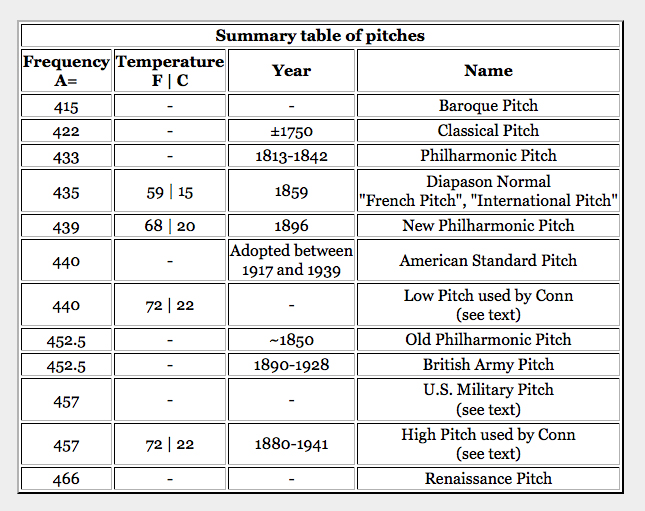
Musicians and music lovers keen on conspiracy may find this highly interesting: Musical Cult Control by Dr. Leonard Horowitz reveals manipulation of the modern musical scale, specifically that A440 concert tuning was chosen for its comparative tendency to cause 'mass hysteria'. See also James Tobias' research paper: "Composing for the Media: Hanns Eisler and Rockefeller Foundation Projects in Film Music, Radio Listening, and Theatrical Sound Design" ( PDF archive ) The paper notes Theodor Adorno's (involved with The Beatles) "Composing for the Films" (Oxford University Press 1947) is a standard textbook reference. Interesting to hear musical scale changing over time: Beethoven's Eroica opening chords by numerous orchestras.
From http://www.gearslutz.com/board/so-much-gear-so-little-time/738660-international-standard-pitch-survey-2.html
"With regard to the esoteric qualities of A=432hz:
"When an instrument is tuned to this pitch, notes begin to fall in line with Sacred geometry, i.e. PI, PHI, the fibonacci sequence, the golden ratio...mathematical constants which form the basic building blocks of the universe.
"It is not a stretch for me to envision esoteric effects when resonating with such frequencies. The ancients knew this and resonant frequencies were used in healing, achieving higher levels of consciousness, etc. I personally believe it was this knowledge and use of resonant frequency in which the Egyptians (and other builders of megaliths) moved stones. For an example closer to home (here in the states) check out the Coral castle story in florida.
"Any doubters of the power of resonant frequencies would be wise to study Nikola Tesla's work or Dr. Royal Rife's use of specific frequencies to kill bacteria.
"It IS true that it was N-A-Z-I propaganda minister Joseph Goebbels who instituted the change to the 440 standard. Hmmmm, I find that particularly curious. It is my personal belief that a minor shift away from resonating with universal principles is enough to negate the esoteric power of sound.
"Call me crazy if you will, but as musicians with knowledge of intervals and major/minor harmony, we all know how to manipulate emotions with notes....it follows that there are much greater things that can be done under the right conditions and with the right knowledge."
And by a different poster: "...The Stuttgard Conference of 1834 recommended C264 (A440) as the standard pitch based on Scheibler's studies with the first strobe device. For this reason A440 has been referred to as Stuttgard or Scheibler pitch. ... In 1939, an international conference (not the you-know-whos) recommended that the A above middle C be tuned to 440 Hz. As a technical standard, this was taken up by the International Organization for Standardization in 1955 and reaffirmed by them in 1975 as ISO 16."
Quotes from MUSICAL CULT CONTROL article:
"... musical frequencies most beneficial to health, psychosocial harmony, and world peace have been suppressed."
"This amounts to enslavement for the conduct of genocide. ...Music bioenergetically affects your body chemistry, psychoneuroimmunology, and health. Your body is now vibrating musically, audibly and subliminally, according to an institutionally imposed frequency that resonates in harmony with aggression and in dissonance with love.
"Intensive research into the military and commercial value of compelling 'herd behavior' with music to induce stress, promote diseases, and suppress spirituality..."
"What few people realize, regardless of the type of music played in the Western World, the standard Anglo-American tuning for instruments and voices was instituted at the same time, by the same agents and agencies, advancing acoustic war studies for inducing mass hysteria. ... ultimate power and control is waged bioenergetically (i.e., biospiritually), through frequency modulations or electromagnetic manipulations affecting consciousness and impacting biology, physiology, and human behavior.
"Between World Wars I and II, accelerating during the 1930s, scientific studies in musical frequencies best suited for war-making were funded...A major objective of this war, and profitable population control, research was to determine the musical factors capable of producing psychopathology, emotional distress, and mass hysteria.
"This knowledge best explains why so many musicians intuitively feel better tuning up, or down, a bit sharp or flat, from A=440Hz 'standard tuning.' More natural alternatives [Solfeggio: A=444Hz C=528Hz, and Verdi A=432Hz] have been growing in popularity. Recording artists seek the ultimate musical expression reflected in Divine-human communion. Musicians who are spiritually-sensitive to pitch are compelled instinctively to reject intrusions to pure creativity in harmony with the flow of sacred cosmic energy.
"These findings offer a most reasonable, simple, pleasant, and powerful remedy residing in restoring naturally preferred frequencies to music. Instruments and voices tuned to A=444Hz frequency are far more acoustically pleasing, instinctively attractive, kinesthetically stimulating, spiritually refreshing, scientifically linked to genetic repair, and arguably, even resonating pure love."
"Many musicians, mathematicians, physicians, physicists, and even geneticists, now celebrate the emergence of truth about A=444Hz (C(5)=528Hz) as an apparent carrier wave of love, broadcasting universally from the heart of the electromagnetic energy matrix. The vast majority of objective investigators now view these revelations as an opportunity to rediscover our spiritual roots in music, in accordance with an accelerating Spiritual Renaissance. The emergence of this knowledge is perfectly timed to remedy otherwise impossible problems imposed on the world by unelected leaders of economic and geopolitical chaos.
"Thus, musicians, vocalists, and audiences are urged to discuss these findings, reject the militarization of music that has been secretly administered, and retune instruments, voices, and ears to frequencies most sustaining and healing. Restoring integrity to the performing arts and sciences this way will impact populations most beneficially."
- See also A440, A432, C528, Solfeggio, Verdi, Jamie Butuff, Dan Winter, Jason Verbelli.
- Timbre Affects Pitch by Allan Vurma, Marju Raju and Annika Kuuda, Estonia Academy of Music and Theatre - "...on the question of whether the timbre difference of two sounds with harmonic spectra, produced by natural musical instruments or the singing voice, may influence subjective assessments of the pitch of one sound in relation to the pitch of the other. ... Tests ... revealed pitch shifts of significant magnitude likely to affect intonation quality in a musical performance among both musicians and non-musicians. The conclusion drawn from the study is that timbre-induced pitch shifts may attain magnitudes that are likely to lead to conflicts between subjective and fundamental-frequency-based pitch assessments." Lyn Cavanagh - A Brief History of the Establishment of International Standard Pitch A-400 Hz
- This intertwines with Cymatics, the study of sound or other vibrations in matter (often water): "Music, in the absolute sense, is the invisible geometry of the cosmos, a delicate tracery of frequencies that harmonise with each other and from which all matter manifests. The conductor of this sublime symphony is the Creative Force of the cosmos, some people prefer to say: God. Music, as sensed by humans, is a delicate tracery of audible frequencies that harmonise with each other and generally please our emotions. What is not commonly known is that music has the almost magical power to create form from formlessness. If the reader doubts this, click the arrow below to view water under the influence of music, revealing the invisible geometry of music." See cymascope.com, omega432.com, Cymatics.
- Copied from cymascope.com news --
May 26th 2013 - Cymatics featured on Discovery Channel
The Discovery Channel in the USA and Channel 5 in the UK, recently aired a documentary titled "The Da Vinci Code: The True Story", in which the truth behind Dan Brown's novel is revealed. Aspects of the chapel were featured in Dan Brown's novel, The Da Vinci Code. The documentary features, among other items, the famous Rosslyn Cubes, a series of 213 carved cuboids that decorate the Lady Chapel in Edinburgh's famous Rosslyn Chapel. Each cube carries a cymatic pattern in raised relief; many people over the last few decades have attempted to decode the patterns to reveal what was thought to be music, each cymatic pattern representing a musical note.
No one had succeeded until father and son team, Thomas and Stuart Mitchell, focussed their considerable musical talents on the challenge. The secret of the cubes was indeed musical and the music that they decoded has been named the Rosslyn Motet. The film maker asked CymaScope.com if we could confirm Stuart and Thomas' musical code, on-camera. Using an electromechanical Chladni plate we were able to find patterns that strongly resembled the patterns-versus-frequencies discovered by the Mitchells. This exciting development has showcased cymatics to millions of viewers and is sure to help popularize cymatics as an emergent science.
The patterns we confirmed can be seen on Thomas Mitchell's web site.
The Rosslyn Motet music is available for download.
The full "The Da Vinci Code: The True Story" documentary is available to view on YouTube.
- CymaGlyph Demos with John Stuart Reid -- The Shape of Sound featuring John Stuart Reid
- The new shape of music: Music has its own geometry
Writing in the April 18 issue of Science, the trio has outlined a method called "geometrical music theory" that translates the language of musical theory into that of contemporary geometry. They take sequences of notes, like chords, rhythms and scales, and categorize them so they can be grouped into "families." They have found a way to assign mathematical structure to these families, so they can then be represented by points in complex geometrical spaces, much the way "x" and "y" coordinates, in the simpler system of high school algebra, correspond to points on a two-dimensional plane.
- James Furia, Musical Geometry - Simple but powerful presentation that links musical theory with geometry, Carl Munck's THE CODE, cymatics, A440, the pyramids and much more - http://youtube.com/watch?v=LJVO-FcxDio Edgar Cayce: '...the pyramids were built on a song.'
-
DataIsNature -- "Some years a back I remember being drawn to fine circular geometric patterns being formed in a glass of water on a table in a room resonating to the bassline of a Roland TB-303 Synth. The intrinsic geometric forms found in nature, the microscopic and macroscopic also are also being perpetrated through invisible forces such as sound waves. Hans Jenny pioneered the study of wave phenomena, and named the art/science Cymatics - derived from the Greek Kyma or kymatika meaning matters pertaining to waves. Over a period of years he animated dust particles, liquids and Iron fillings using sine-wave vibrations within the audible range. All too familiar patterns begin to be formed in these substances as a result of the sound shaping form. In 1967 Jenny published the book 'Cymatics - The Structure and Dynamics of Waves and Vibrations'. Moving on from the use of sound generators Jenny eventually invented his own machine for producing very precisely controlled oscillations. The Tonoscope could allow very exact and reproducible experiments to be carried out - at its core were a set of crystal oscillators. Hans Jenny noted to similarity between his sonic patterns and the patterns found all around us and concluded that biological evolution was a result of vibrations - if not connected to it. The science of visualising sound waves has a history and goes back further then Jenny beginning with Ernst Chladni. Chladni found a way to visualise sound waves by drawing a violin bow across the edge of flat plates covered with sand, the patterns he produced go by the name of Chladni figures. 'Symmetry and harmonics' by Joost Rekveld (click on 'texts') explores many of these ideas and is a great preliminary reader on the history of visualising sound. He importantly draws connections between the early experimenters and later work by filmmakers such as Mary Ellen Bute and Norman McLaren who used oscilloscopes to generate moving images. It's also interesting to note certain similarities to the geometries of some recent symmetrical generative art. Applet demonstrating Chladni figures."
- Journal of Cymatics - The Study of Sound Made Visible - "In his article, The Physics of Sound, Reid says that the true form of sound is actually spherical, or bubble-like, in nature: 'Sound in air is the transfer of periodic movements between adjacent colliding atoms or molecules. This sonic energy typically expands away from the site of the collisions as a spherical or bubble-shaped emanation.' Reid also discusses the nature of light and how sound can actually 'create visible light.'

- "If our eyes could see music we would not see waves, as is commonly believed, but beautiful holographic bubbles, with shimmering kaleidoscopic patterns on their surface." -- 12 Piano notes made visible for the first time - "Shannon Novak, a New Zealand-born fine artist, commissioned us to image 12 piano notes as inspiration for a series of 12 musical canvases. We decided to image the notes in video mode because when we observed the 'A1' note we discovered, surprisingly, that the energy envelope changes over time as the string's harmonics mix in the piano's wooden bridge. Instead of the envelope being fairly stable, as we had imagined, the harmonics actually cause the CymaGlyphs to be wonderfully dynamic. Our ears can easily detect the changes in the harmonics and the CymaScope now reveals them--probably a first in acoustic physics."
- A brief history of the establishment of international standard pitch A=440 Hertz ( PDF archive )
- History_of_pitch_standards_in_Western_music
- "I love the solfeggio tuning conspiracy, i've been regularly tuning my guitar to 444 but i prefer 432, it makes your guitar sound like Hendrix. I still use 440 but only when i'm feeling like jamming with the devil." »
- Ascient Solfeggio (6 musical notes for energizing the soul): 396 Liberate Guilt and Fear, 417 Undo situations and facilitate change, 528 Miracle DNA repair, initiate transformation and miracles, 639 Enable connection and relationships, 741 Awaken intution, 852 Return to spiritual order. [936 Pineal] Ernst Chladni (sand on metal plates, played with violin bow). Sound as a force of creation. Shiva Nataraja (drums) dance, creation. Word of God summons form from the void. Motion. Yin-yang. Miracle of 528 Hz Solfeggio and Fibonacci
- Musical Temperament
- "The 'electric church' as an ambition...was this speaking metaphorically? It's just a belief that I have. We do use electric guitars, everything is electrified nowadays. So, therefore, the belief comes through electricity to the people. That's why we play so loud, because it doesn't actually hit through the eardrums... We play for our sound to go inside the soul of the person, actually...and see if we can awaken some kind of thing in their minds, because there are so many sleeping people. You can call it that if you want to." --Jimi Hendrix on the Dick Cavett Show, youtube
- "...religion is all about running around all type of music, vibration of sound, because it's word, sound, and power, you know. ...it cast a spell upon them. And after that, it was like magic." - Aston "Family Man" Barrett, Bob Marley's longtime bassist and arranger, » // The Wailers rapidly embraced the new sound, coupling its unstoppable vibrancy with a fortified spiritual content drawn from the Rastafarian faith. "Yeah!" Bob Marley said, "that's where reggae comes from - the Rastafaris. 'Reggae' kind of come from a Spanish, Latin word, and it mean 'King Music.' You get a three-in-one music. You get a happy rhythm with a sad sound with a good vibration. It's roots music. Reggae is what you call international music, complete music. Any music you want to play inside of reggae, you can put it in there. But it's the rhythm now that's reggae. It's proud rhythm, man - that rhythm can't end. It have a different touch. It's earth rhythm, roots! So you can find it can't stop. It's like from the beginning of time, from creation." (In an interesting parallel, my friend Tom Wheeler once asked Muddy Waters where the blues had come from. Muddy closed his eyes, thought for a moment, and said, "The groove was here - before time!")
- Forgotten In Time: The Ancient Solfeggio Frequencies (2010-10-22)
-
Tuning the guitar to the 528 frequency
Set any tuner so that A4 = 444 Hz (instead of A4 = 440 Hz), then retune each subsequent string to this new A4 = 444 Hz base note. Do not tune to an A flat: go a little sharp, but not quite a half tone. A4 = 444 Hz (instead of A4 = 440 Hz) gives a C5 = 528.008 Hz.
"528 Hz ... has been mathematically proven fundamental to all sacred geometry and cosmology. It is reported to repair damaged DNA. It is C5 on the ancient diatonic scale [when A4 = 444 Hz, versus A4 = 440 Hz of "standard tuning"]. It is the third note, MI tone, of the original Solfeggio scale credited for producing miracles...
- Do particular frequencies emote (pardon the pun) certain "sacred" or other recognizable, fundamental geometries? Cymatics is the study of the effects of sound vibrations on matter. Images of research by Dr. Emoto into how sound vibrations and other energies manifest certain geometries in water, ice crystals, matter.
- Biological and Brainwave Frequency List includes list, bibliography and glossary
- Mains Hum, particularly interesting regarding brain wave entrainment, tube heater hum and Ground Loops
- Effects of 6-10 Hz ELF on Brain Waves Article by David S. Walonick, originally printed in Borderlands (Vol. XLVI, Nos. 3&4, May - August 1990)
"There is evidence that ELF magnetic waves can affect brain waves. This set of experiments was designed to study the effects of ELF rotating magnetic fields on the brain.
"The specific ELF frequencies I was interested in studying are 6-10 Hertz. These frequencies are the same as those produced by the human brain in the theta and alpha states. Generally, specific brain wave frequency ranges can be associated with mood or thought patterns. Frequencies below 8 Hertz are considered theta waves. While these seem to be some of the least understood frequencies, they also seem to be associated with creative, insightful thought. When an artist or scientist has the "aha" experience, there's a good chance he or she is in theta. Alpha frequencies are from 8 to 12 Hertz and are commonly associated with relaxed, meditative states. Most people are in an alpha state during the short time immediately before they fall asleep. Alpha waves are strongest during that twilight state when we're half asleep and half awake. Beta frequencies (above 12 Hertz) coincide with our most "awake" analytical thinking. If you are solving a math problem, you're brain is working at beta frequencies. Most of our waking hours as adults are spent in the beta state.
"Each ELF exposure consisted of a ten second, sine-wave transmission separated from one another by 45 - 60 seconds of no exposure. The voltage fed to the coil was 3.1 VAC (RMS). The coil was positioned 18? in front of the subjects head. The outputs from the ELF transmitter (function generator) and the brain wave monitor were fed directly into the computer A to D board, allowing both to be displayed on the computer monitor (and recorded on disk) simultaneously. The sampling rate of the A to D converter was set at 2000 samples per second for the entire experiment. This was sufficient to visually detect differences of .1 Hertz between the ELF and brain wave frequencies. Subjects were not told when a transmission was beginning. However, at the end of each transmission, they were asked to "report". This was their current relaxation level based on the zero to ten scale. They also reported any feelings they had experienced and these were recorded verbatim. Twenty-one frequencies were presented to each subject (from 6 to 10 Hertz in increments of .2 Hertz. For half the subjects, these frequencies were randomly selected. For the other subjects, they began at 10 Hertz and were decreased by .2 Hertz with each transmission. Subjects were not told the order of frequencies that would be presented to them.
"Examination of the computer data revealed substantial differences between subjects. Some subjects showed lock-on (entrainment) over a wide frequency range, while other subjects showed no lock-on whatsoever. In general, lock-on occurred most frequently from 8.6 to 10 Hertz and less frequently below 8.6 Hertz.
"One subject displayed lock-on for all frequencies from 7.4 to 10 Hertz. Two subjects displayed no lock-on over the entire frequency range. While I did not test a sufficient number of subjects to be statistically significant, I suspect that susceptibility to ELF entrainment follows the normal (bell-shaped) curve. At this time, I do not have any hypothesis that would allow us to predict who is susceptible and who is not.
"Several interesting observations were readily apparent. Lock-on generally occurred very rapidly, within a quarter of a second in most cases. If lock-on did not occur at a specific frequency in the first second, it didn't at all. When the brain did lock on, the amplitude of the brain waves increased to nearly double their normal size. This is typical for naturally (non-ELF) produced alpha patterns. The brain locked on to higher frequencies (9-10 Hertz) more readily, and maintained the lock-on for the entire duration of the transmission. As the frequency was lowered (below 8.6 Hertz), lock-on for most subjects occurred in bursts, rather than being continuous. For example, there might be immediate lock-on for two seconds; then the brain would "fight" the ELF frequency for a quarter of a second, and then lock-on again for another few seconds, etc.. I use the word "fight" because it looked like the brain was fighting the ELF to maintain its own frequency. The "fight" was characterized by low amplitude beta frequencies in the 15-20 Hertz range. These may, of course, have simply been analytical type thoughts, but they were not observed when the frequency was in the 9-10 Hertz range. This "fight" became more frequent as the frequency was lowered, until no lock-on was observed at all.
"None of the subjects were able to consciously detect the presence of the ELF field. One female subject was able to detect whenever the field started or ended, but could not accurately say when if it was on or off at any given time. In other words, she was able to detect the change in the magnetic field, but not the presence or absence of the magnetic field itself. She thought she felt it because it aggravated her sinuses. When lock-on occurred, the brain waves lagged behind the transmitted ELF. This appeared to have been the "reaction time" of the brain to the ELF waves (approximately 60-80 milliseconds). More accurate experimentation is needed to explore this relationship.
"Subjects verbatim reports were quite revealing. (Keep in mind that none of the subjects actually said they felt the ELFs.) The most common verbatim reports occurred between 8.6 and 9.6 Hertz. Common statements were subtle "tingling" sensations in the fingers, arms, legs, teeth, and roof of the mouth. Two subjects reported a "metallic" feeling in their mouth. One subject reported a "tightness" in the chest and another subject reported a "tightness" in the stomach. Several subjects also reported sensations when the ELF frequency was between 6 and 7 Hertz. The verbatim responses in this range were "ringing" in the ears, "flushed" face, "fatigued", "tightening" in the chest and "increasing" pulse.
"Lock-on occurred at lower frequencies more often when the transmitted frequencies were progressively lowered, rather than randomly presented. It would seem that the brain prefers a gradual lowering of frequency rather than a sudden or abrupt change in frequency. This may have been due to the extremely short duration of each transmission (10 seconds). It may be that this effect would disappear if longer transmission times were used.
"There was no significant correlation between subjects reported level of relaxation and the ELF frequency or the occurrence of lock-on. Again, this may have been due to the extremely short duration of each transmission.
"It is clear from these experiments that brain waves do in fact lock on to artificially produced ELFs in the 6 - 10 Hertz range. It is equally clear that the 10 second transmission was not sufficient to alter subjects moods to any consistent degree.
"Since my original experiment, I have continued to study the interaction of ELF's and brain waves. These mini-experiments were conducted more informally than my original experiment and the observations are based on only one or two subjects. They should be considered only observations until confirmed by additional study.
"A sine wave produces lock-on more readily than a square wave or a triangle wave. A sine wave output produces a rotating magnetic field where there is a gradual build up, collapse and reversal of the field intensity. A square wave output produces a pulsed alternating magnetic field where the build-up, collapse and reversal of the magnetic field is more abrupt.
"The brain is sensitive to a wide range of intensities. I have observed lock-on with power settings down to one half of a milliwatt.
"Psychics and "sensitives" are neither more or less prone to lock-on than anyone else. I have tested two well-known psychics and a Kahuna from Hawaii. While all three subjects produced more alpha that usual, it was not related to the ELF generator and they did not show unusual lock-on. It is interesting to note, that the woman who could "feel" when the field switched off and on (in my first experiment) was one of these psychics.
"Extended exposure to ELF's does alter moods, but the effect is subtle. I was not able to duplicate the "dramatic psychoactive" effect that Robert Beck has reported. Low frequencies (below 8 Hz) seem to produce a general agitation or uneasiness, while higher frequencies (8.6-10 Hz) produce a general feeling of relaxation. These are not profound effects like drug induced mood changes. The subject is not aware of any change in his consciousness or mood. From his perspective, nothing has changed. However, an outside observer can detect subtle changes (e.g. body movement). I have confirmed this by monitoring muscle activity with an EMG monitor.
"I have exposed myself to ELFs for one and two hour durations and have found that the frequencies from 8.6 to 9.8 Hertz to be sleep inducing; however, it is impossible to eliminate the placebo effect from experiments I performed on myself.
"I built and distributed several portable ELF generators for testing. I have received many reports that indicate that falling asleep with the ELF generator operating is probably not a good idea. People don't feel rested when they sleep with the ELF generator on. My personal experience supports this. ELF's may inhibit dreaming which is necessary for normal brain functioning.
"I have found three definite beneficial uses for the ELF generator: a) for relaxation, b) to eliminate jet lag, and c) the elimination of seizures in a dog."
- Dr. Robert Beck interview on Psychotronics - electromagnetic and acoustic brain wave entrainment
- More scientific evidence supports the need for accurate wideband amplification in subjectively "good sound": Reproduction of high frequencies measurably and dramatically stimulates increased brain activity, and "...[listeners] felt the sound containing [high frequencies] to be more pleasant than the same sound lacking [high frequencies and ultrasonics]... These results suggest the existence of a previously unrecognized response to complex sound containing particular types of high frequencies above the audible range. We term this phenomenon the 'hypersonic effect.'" Biological Effects of High Frequency Sound:
"Inaudible high-frequency sounds affect brain activity: hypersonic effect. J Neurophysiol 83: 3548-3558, 2000. Although it is generally accepted that humans cannot perceive sounds in the frequency range above 20 kHz, the question of whether the existence of such "inaudible" high-frequency components may affect the acoustic perception of audible sounds remains unanswered.
"In this study, we used noninvasive physiological measurements of brain responses to provide evidence that sounds containing high-frequency components (HFCs) above the audible range signicantly affect the brain activity of listeners. We used the gamelan music of Bali, which is extremely rich in HFCs with a nonstationary structure, as a natural sound source, dividing it into two components: an audible low-frequency component (LFC) below 22 kHz and an HFC above 22 kHz. Brain electrical activity and regional cerebral blood flow (rCBF) were measured as markers of neuronal activity while subjects were exposed to sounds with various combinations of LFCs and HFCs. None of the subjects recognized the HFC as sound when it was presented alone. Nevertheless, the power spectra of the alpha frequency range of the spontaneous electroencephalogram (alpha-EEG) recorded from the occipital region increased with statistical signicance when the subjects were exposed to sound containing both an HFC and an LFC, compared with an otherwise identical sound from which the HFC was removed (i.e., LFC alone).
"In contrast, compared with the baseline, no enhancement of alpha-EEG was evident when either an HFC or an LFC was presented separately. Positron emission tomography measurements revealed that, when an HFC and an LFC were presented together, the rCBF in the brain stem and the left thalamus increased signicantly compared with a sound lacking the HFC above 22 kHz but that was otherwise identical. Simultaneous EEG measurements showed that the power of occipital alpha-EEGs correlated signicantly with the rCBF in the left thalamus.
"Psychological evaluation indicated that the subjects felt the sound containing an HFC to be more pleasant than the same sound lacking an HFC. These results suggest the existence of a previously unrecognized response to complex sound containing particular types of high frequencies above the audible range. We term this phenomenon the 'hypersonic effect.'
"It is generally accepted that audio frequencies above 20 kHz do not affect human sensory perception since they are beyond the audible range (Durrant and Lovrinc 1977; Snow 1931; Wegel 1922). Thus for example, most of the conventional commercial digital audio formats [e.g., compact disks (CDs) digital audio tapes (DATs), and digital audio broadcasting] have been standardized to a frequency range that does not allow such high-frequency components (HFCs) of sounds to be included. As a premise for determining these formats, several psychological experiments were performed to evaluate sound quality subjectively by means of questionnaires, according to the recommendation of the Comitee Consultatif International Radiophonique (CCIR 1978) or its modified versions.
"Studies by Muraoka et al. (1978) and Plenge et al. (1979), as well as other studies, concluded that listeners did not consciously recognize the inclusion of sounds with a frequency range above 15 kHz as making a difference in sound quality. Nevertheless and interestingly enough, artists and engineers working to produce acoustically perfect music for commercial purposes are convinced that the intentional manipulation of HFC above the audible range can positively affect the perception of sound quality (Neve 1992). Indeed, the Advanced Audio Conference organized by the Japan Audio Society (1999) proposed two next-generation advanced digital audio formats: super audio compact disk (SACD) and digital versatile disk audio (DVD-audio). These formats have a frequency response of up to 100 kHz and 96kHz, respectively. However, the proposal was not based on scientific data about the biological effects of the HFCs that would become available with these advanced formats.
"Although recently there have been several attempts to explore the psychological effect of inaudible HFCs on sound perception using a digital audio format with a higher sampling rate of 96 kHz (Theiss and Hawksford 1997; Yamamoto 1996; Yoshikawa et al. 1995, 1997), none of these studies has convincingly explained the biological mechanism of the phenomenon. This may reflect in part the limitations of the conventional audio engineering approach for determining sound quality, which is solely based on a subjective evaluation obtained via questionnaires.
"There are two factors that may have some bearing on this issue. First, it has been suggested that infrasonic exposure may possibly have an adverse effect on human health (Danielsson and Landstrom 1985), suggesting that the biological sensitivity of human beings may not be parallel with the 'conscious' audibility of air vibration. Second, the natural environment such as tropical rain forests, usually contains sounds that are extremely rich in HFCs over 100 kHz. From an anthropogenetic point of view, the sensory system of human beings exposed to a natural environment would stand a good chance of developing some physiological sensitivity to HFCs. It is premature to conclude that consciously inaudible high-frequency sounds have no effect on the physiological state of listeners.
"In the present study, therefore, we addressed this issue by using quantifiable and reproducible measurements of brain activity. To measure human physiological responses to HFCs, we selected two noninvasive techniques: analysis of electroencephalogram (EEG) and positron emission tomography (PET) measurements of the regional cerebral blood flow (rCBF). These methods have complementary characteristics. EEG has excellent time resolution, is sensitive to the state of human brain functioning, and places fewer physical and mental constraints on subjects than do other techniques such as functional magnetic resonance imaging (fMRI). This is of special importance because some responses might be distorted by a stressful measurement environment itself. On the other hand, PET provides us with detailed spatial information on the neuroanatomical substrates of brain activity. Combining these two techniques with psychological assessments, we provide evidence herein that inaudible high-frequency sounds have a significant effect on humans."
- Babytalk Research - links to articles on audio development
- Science, bilingualism, and babies. TED: The linguistic genius of babies - "Patricia Kuhl shares astonishing findings about how babies learn one language over another -- by listening to the humans around them and "taking statistics" on the sounds they need to know. Clever lab experiments (and brain scans) show how 6-month-old babies use sophisticated reasoning to understand their world."
- My Brilliant Brain is a compelling three part documentary series exploring the incredible inner workings of the human brain. The programs look at a group of remarkable people and poses questions about the origins of genius: are these extraordinary abilities genetic, developed or acquired by accident? The correct question to ask is what [few] parts of the brain are not being used while playing music? http://www.youtube.com/watch?v=3nOaXho9NqY&feature=related
- How Arts Training Improves Attention and Cognition - Dr. Michael I. Posner: "Does education in the arts transfer to seemingly unrelated cognitive abilities? Researchers are finding evidence that it does. Michael Posner argues that when children find an art form that sustains their interest, the subsequent strengthening of their brains' attention networks can improve cognition more broadly."
... "We know that the brain has a system of neural pathways dedicated to attention. We know that training these attention networks improves general measures of intelligence. And we can be fairly sure that focusing our attention on learning and performing an art -- if we practice frequently and are truly engaged -- activates these same attention networks. We therefore would expect focused training in the arts to improve cognition generally.
... "The idea that training in the arts improves cognition generally really is not so bold within the context of what we call activity-dependent plasticity, a basic tenet of brain function. It means that the brain changes in response to what you do. Put another way, behavior shapes and sculpts brain networks: What you do in your day-to-day life is reflected in the wiring patterns of your brain and the efficiency of your brain's networks. Perhaps nowhere is this more evident than in your attention networks...
... "...why have scientists been unable to nail down a cause-and-effect relationship between arts education and cognition -- for example, "[X] amount of training in art form [Y] leads to a [Z] percent increase in IQ scores"? Such a relationship is difficult to confirm scientifically because there are so many variables at work; scientists have only begun to look at this relationship in a systematic, rigorous fashion.
"Early tests of the idea that the arts can boost brainpower focused on the so-called "Mozart effect." A letter published in 1993 in the journal Nature held that college students exposed to classical music had improved spatial reasoning skills,2 which are important to success in math and science. This observation set off a wave of marketing hype that continues to this day. Despite numerous efforts, however, scientists have not reliably replicated the phenomenon. Nonetheless, these studies have involved only brief periods of exposure to music, rather than explicit musical training or practice.
"More recent attempts to link arts training with general improvements in cognition have relied on a different approach. Researchers have focused on longer periods of engaged participation and practice in arts training rather than simple exposure to music. For example, in 2004, E. Glenn Schellenberg of the University of Toronto at Mississauga published results from a randomized, controlled study showing that the IQ scores of 72 children who were enrolled in a yearlong music training program increased significantly compared with 36 children who received no training and 36 children who took drama lessons. (The IQ scores of children taking drama lessons did not increase, but these children did improve more than the other groups on ratings of selected social skills.)
"In a study published in the Journal of Neuroscience in March 2009, researchers Ellen Winner of Boston College, Gottfried Schlaug of Harvard University and their colleagues at McGill University used neuroimaging scans to examine brain changes in young children who underwent a four-year-long music training program, compared with a control group of children who did not receive music training.4 In the first round of testing, after 15 months, the researchers found structural changes in brain circuits involved in music processing in the children who received training. They did not find the same changes in the control group. The scientists also found improvements in musically relevant motor and auditory skills, a phenomenon called near transfer. In this case, the improvements did not transfer to measures of cognition less related to music -- termed far transfer. We do not know why far transfer to IQ, for example was found in the Schellenberg study and not in this one.
"Taken as a whole, the findings to date tell us that music training can indeed change brain circuitry and, in at least some circumstances, can improve general cognition. But they leave unsettled the question of under what circumstances training in one cognitive area reliably transfers to improvements in other cognitive skills. From our perspective, the key to transfer is diligence: Practicing for long periods of time and in an absorbed way can cause changes in more than the specific brain network related to the skill. Sustained focus can also produce stronger and more efficient attention networks, and these key networks in turn affect cognitive skills more generally.
Music and the Brain symposium, Library of Congress
- Music and the Brain: Depression and Creativity Symposium -- Kay Redfield Jamison, professor of psychiatry and behavioral sciences and co-director of the Johns Hopkins Mood Disorders Center at the Johns Hopkins University School of Medicine, convened a discussion of the effects of depression on creativity. Joining Jamison were two distinguished colleagues from the fields of neurology and neuropsychiatry, Dr. Terence Ketter and Dr. Peter Whybrow. The Music and the Brain series is co-sponsored by the Library's Music Division and Science, Technology and Business Division, in cooperation with the Dana Foundation. The "Depression and Creativity" symposium marks the bicentennial of the birth of German composer Felix Mendelssohn (1809-1847), who died after a severe depression following the death of his sister, Fanny Mendelssohn Hensel, also a gifted composer. One of the nation's most influential writers on creativity and the mind, Kay Redfield Jamison is a noted authority on bipolar disorder. She is the co-author of the standard medical text on manic-depressive illness and author of "Touched with Fire," "An Unquiet Mind," "Night Falls Fast" and "Exuberance: The Vital Emotion." Dr. Terence Ketter is known for extensive clinical work with exceptionally creative individuals and a strong interest in the relationship of creativity and madness. He is professor of psychiatry and behavioral sciences and chief of the Bipolar Disorders Clinic at Stanford University School of Medicine. Dr. Peter Whybrow, an authority on depression and manic-depressive disease, is director of the Semel Institute for Neuroscience and Human Behavior at the University of California, Los Angeles (UCLA). He is also the Judson Braun Distinguished Professor and executive chair of the Department of Psychiatry and Biobehavioral Sciences at the David Geffen School of Medicine at UCLA.
- Music and the Brain: From Mode to Emotion in Musical Communication -- Music employs a number of mechanisms for conveying emotion. Some of them are shared with other modes of expression (speech, gesture) while others are specific to music. The most unique way that music communicates emotion is through the use of contrastive scale types. While Westerners are familiar with the major/minor distinction, the use of contrastive scale types in world musics is universal. Looking at the expression of emotion in both Western and non-Western musics, Brown invokes the theory of Clore and Ortony, who posit three categories of emotions 1) "outcome" emotions related to the outcomes of goal-directed actions (e.g., happiness, sadness); 2) "aesthetic" emotions related to the appraisal of the quality of objects (e.g., like, dislike); and 3) "moral" emotions related to an assessment of the agency of individuals actions (e.g., praise, scorn). While representational art-forms like theater or dance can represent all three categories, music is probably most adept at expressing "outcome" emotions, such those that sit along the happy/sad spectrum. Speaker: Steven Brown, Director, NeuroArts Lab, McMaster University
- Music and the Brain: The World in Six Songs -- Director of McGill University's Laboratory for Musical Perception, Cognition and Expertise and best-selling author of "This is Your Brain on Music," Daniel Levitin blends cutting-edge scientific findings with his own experiences as a former record producer and still-active musician. The Music and the Brain Lecture Series is a cycle of lectures and special presentations that highlight an explosion of new research in the rapidly expanding field of "neuromusic." Programming is sponsored by the Library's Music Division and its Science, Technology and Business Division, in cooperation with the Dana Foundation. Daniel Levitin is a cognitive psychologist, neuroscientist, record producer, musician, and writer. He is currently James McGill Professor of Psychology and Behavioral Neuroscience at McGill University in Montreal. He has published scientific articles on absolute pitch, music cognition and neuroscience and is more widely known as the author of two best-selling books, "This Is Your Brain On Music: The Science of a Human Obsession" and "The World in Six Songs: How the Musical Brain Created Human Nature." He worked as a producer and sound designer on albums by Blue Oyster Cult, Chris Isaak, and Joe Satriani; as a consultant to Steely Dan and Stevie Wonder; and as a recording engineer for Santana and The Grateful Dead.
- Music and the Brain: The Music of Language and the Language of Music -- In our everyday lives, language and instrumental music are obviously different things. Neuroscientist and musician Ani Patel is the author of a recent, elegantly argued offering from Oxford University Press, "Music, Language and the Brain." Oliver Sacks calls Patel a "pioneer in the use of new concepts and technology to investigate the neural correlates of music." In Patel's presentation, he discusses some of the hidden connections between language and instrumental music that are being uncovered by empirical scientific studies. The Music and the Brain Lecture Series is a cycle of lectures and special presentations that highlight an explosion of new research in the rapidly expanding field of "neuromusic." Programming is sponsored by the Library's Music Division and its Science, Technology and Business Division, in cooperation with the Dana Foundation. Aniruddh Patel is the Esther J. Burnham Senior Fellow in Theoretical Neurobiology at the Neurosciences Institute.
- Music and the Brain: Music, Criminal Behavior, and Crime Prevention -- A fascinating discussion of the use of classical music by law enforcement and other cultural institutions as social control, to quell and prevent crime. Their conversation touches on how classical music is viewed in contemporary culture, how it can be a tool for discouraging criminal activity and anti-social behavior, as well as its history as a mind-altering experience. Dr. Jacqueline Helfgott, Seattle University [author of Criminal Behavior: Theories, Typologies, and Criminal Justice (2008)], and Norman Middleton, Library of Congress Music Division
- Music and the Brain: The Mind of an Artist -- Michael Kubovy and Judith Shatin, both from the University of Virginia, discuss "The Mind of the Artist." Debate has long raged about whether and how music expresses meaning beyond its sounding notes. Kubovy and Shatin discuss evidence that music does indeed have a semantic element, and offer examples of how composers embody extra-musical elements in their compositions. Michael Kubovy is a cognitive psychologist who studies visual and auditory perception. Judith Shatin is a composer who explores music's expressive meaning.
- "...one-third of the sensory-motor-cortex of the brain is devoted to the tongue, oral cavity, and speech. In other words, oral frequency emissions spoken, or sung, exert powerful control over life, vibrating genes that influence total well-being and even evolution of the species." - Dr. Leonard Horowitz
- "Living DNA substance (in living tissue, not in vitro) will always react to language-modulated LASER rays and even to radio waves, if the proper frequencies (sound) are being used. This finally and scientifically explains why affirmations, hypnosis and the like can have such strong effects on humans and their bodies. It is entirely normal and natural for our DNA to react to language." - Russian DNA discoveries explain human 'paranormal' events
- Why Your Brain Craves Music, April 2013, Dr. Mercola
Music Prompts Numerous Brain Changes Linked to Emotions and Abstract Decision Making: When you listen to music, much more is happening in your body than simple auditory processing. Music triggers activity in the nucleus accumbens, a part of your brain that releases the feel-good chemical dopamine and is involved in forming expectations. At the same time, the amygdala, which is involved in processing emotion, and the prefrontal cortex, which makes possible abstract decision-making, are also activated, according to new research published in the journal Science.1 Based on the brain activity in certain regions, especially the nucleus accumbens, captured by an fMRI imager while participants listened to music, the researchers could predict how much money the listeners were willing to spend on previously unheard music. As you might suspect, songs that triggered activity in the emotional and intellectual areas of the brain demanded a higher price. Interestingly, the study's lead author noted that your brain learns how to predict how different pieces of music will unfold using pattern recognition and prediction, skills that may have been key to our evolutionary progress. Time reported:2 "These predictions are culture-dependent and based on experience: someone raised on rock or Western classical music won't be able to predict the course of an Indian raga, for example, and vice versa. But if a piece develops in a way that's both slightly novel and still in line with our brain's prediction, we tend to like it a lot. And that, says [lead researcher] Salimpoor, 'is because we've made a kind of intellectual conquest.' Music may, in other words, tap into a brain mechanism that was key to our evolutionary progress. The ability to recognize patterns and generalize from experience, to predict what's likely to happen in the future -- in short, the ability to imagine -- is something humans do far better than any other animals. It's what allowed us (aided by the far less glamorous opposable thumb) to take over the world."
Why Music Makes Us Feel United: So far we've covered that music is involved in both emotional and intellectual centers of your brain, but music also has an, almost uncanny, ability to connect us to one another. Separate research published this month showed one reason for why this might be. When listening to four pieces of classical music they had never heard before, study participants' brains reacted in much the same way. Areas of the brain involved in movement planning, memory and attention all had similar activation patterns when the participants listened to the same music, which suggests we may each experience music in similar ways. The study's lead author noted:3 "We spend a lot of time listening to music -- often in groups, and often in conjunction with synchronized movement and dance ... Here, we've shown for the first time that despite our individual differences in musical experiences and preferences, classical music elicits a highly consistent pattern of activity across individuals in several brain structures including those involved in movement planning, memory and attention." ... "It's not our natural tendency to thrust ourselves into a crowd of 20,000 people, but for a Muse concert or a Radiohead concert we'll do it ... There's this unifying force that comes from the music, and we don't get that from other things."
Music Relieves Anxiety Better Than Drugs and Benefits Premature Babies: A meta-analysis by Levitin and colleagues found some striking benefits of music after reviewing 400 studies.5 Among the data was one study that revealed listening to music resulted in less anxiety and lower cortisol levels among patients about to undergo surgery than taking anti-anxiety drugs. Other evidence showed music has an impact on antibodies linked to immunity and may lead to higher levels of bacteria-fighting immune cells. Playing music in the neonatal intensive care unit (NICU) improved the health of premature babies with respiratory distress or sepsis.6 When parents sang to their babies, or sounds mimicking those in the womb were played, numerous benefits occurred, including changes in heart rates, sucking behavior and parents' stress levels. The researchers noted: "Entrained with a premature infant's observed vital signs, sound and lullaby may improve feeding behaviors and sucking patterns and may increase prolonged periods of quiet-alert states. Parent-preferred lullabies, sung live, can enhance bonding, thus decreasing the stress parents associate with premature infant care." Music is a therapeutic tool for babies and adults alike.
- "When I was in college I studied different culture's beliefs about how music influences people. Both the Ancient Greeks and Hindus had a belief that different scales or ragas invoke different spirits which caused different emotional states. They had a whole science of this. I believe they are right, and Christian theology supports this. If you want to know what type of spirit inspires a certain piece of music examine your thoughts and feelings while and after listening. Instrumental music is less obvious; if there are words, that will make it more clear. Music can be mixed. Even if the words are talking about one thing, there may be other spirits in the music as well. Whatever spirit is around the musician will be transmitted through the music to the listener." - 1ProphetSpeaks
-
Childhood Music Lessons Have Neural Benefit Decades Later
More Evidence That Music Benefits the Brain
Medscape Medical News > Conference NewsSAN DIEGO, California - A trio of new studies shows that musical training affects the structure and function of different regions of the brain, how those regions communicate during the creation of music, and how the brain processes different sensory stimuli.
These insights point to potential new roles for musical training, including fostering brain plasticity, providing an alternative educational tool, and treating learning disabilities, researchers say. The studies were presented here at Neuroscience 2013, the annual meeting of the Society for Neuroscience.
"Playing a musical instrument is a multisensory and motor experience that creates emotions and motions - from finger tapping to dancing - and engages pleasure and reward systems in the brain. It has the potential to change brain function and structure when done over a long period of time," Gottfried Schlaug, MD, PhD, from Harvard Medical School and Beth Israel Deaconess Medical Center (Boston, Massachusetts), an expert on music, neuroimaging, and brain plasticity, said in a conference statement.
These new findings show that "intense musical training generates new processes within the brain, at different stages of life, and with a range of impacts on creativity, cognition, and learning," said Dr. Schlaug, who moderated a press conference where the research was discussed.
Start Music Lessons Early
In one study, researchers found that musical training at a young age may strengthen the brain, especially regions that influence language skills and executive function.
Yunxin Wang, from the State Key Laboratory of Cognitive Neuroscience and Learning at Beijing Normal University in China, and colleagues investigated the effects of music training on brain structure in 48 Han Chinese adults aged 19 to 21 years. All of them had had formal musical training for at least a year, beginning sometime between age 3 and 15.
After controlling for relevant cofactors, they found that the volume of brain regions related to hearing and self-awareness appeared to be larger in those who began taking music lessons before age 7. This hints that early musical training could potentially be used as a therapeutic tool, they say.
"Early musical training does more good for kids than just making it easier for them to enjoy music; it changes their brain and these brain changes could lead to cognitive advances as well. Our study provides evidence that early music training could change the structure of the brain's cortex," Wang noted in a conference statement.
"There is a lot of research showing that musical training has various cognitive benefits, such as better working memory, pitch discrimination performance, and selective attention," Wang told Medscape Medical News. The Biggest Medical News of the Year
"In our study we didn't include any behavioral data but as we found that onset age of musical training was correlated with brain structural changes in regions related to several cognitive functions, such as language production (lingual gyrus) and auditory ability (superior temporal gyrus), it might be possible that some specified musical training could be applied to education in the future," Wang said.
The study was supported by the China's Ministry of Education and National Natural Science Foundation.
A study published earlier this month showed that childhood music lessons have neural benefit decades later. As reported by Medscape Medical News, the researchers found that older adults who took music lessons as children but haven't actively played an instrument in decades have a faster brain response to a speech sound than individuals who never played an instrument.
Music Training Influences Multiple Senses
A second study presented at Neuroscience 2013 hints that musical training improves the ability of the nervous system to integrate information from multiple senses.
"Implications of these results are clearly in the rehabilitation field," Julie Roy, graduate student in speech pathology and audiology at the University of Montreal, Quebec, Canada, told Medscape Medical News.
Prior research on the sensory impact of musical training has focused on audiovisual processing, she explained. Her study, she said, suggests a broader role for musical training in improving the ability of the nervous system to integrate information from all senses.
To gauge how musical training may affect multisensory processing, the researchers administered 2 tasks that simultaneously engage the sense of touch and hearing to a group of highly trained musicians and a group of nonmusicians.
Test results showed that musicians and nonmusicians had identical capabilities to detect and discriminate information based on a single sense, but the musicians were better able to separate auditory and tactile information. This finding suggests that long-term musical training influences multisensory processing, the researchers say.
"By finding that even though using different modalities and nonmusical stimuli, musicians still seem to have enhanced multisensory processing, we are one big step further down the road in affirming that musicians have overall enhanced multisensory processing," Roy told Medscape Medical News.
"We live in a multisensory environment where auditory and tactile information are processed together to give us the perception of the world as we know it. Knowing that musical training can indeed enhance this processing is of crucial importance when speaking about people with disability in one or both of those modalities, but even with people recovering from a stroke, for example, or diagnosed with a degenerating disease, or again, simply aging," she noted.
The study was supported by the Quebec Health Research Fund and the National Sciences and Engineering Research Council of Canada.
Musical Improv Strengthens Brain Circuits
A third study presented at the conference sheds light on the neural basis of musical creativity. The researchers used functional MRI to study neural correlates of musical improvisation in 39 professional pianists with varying degrees of improvisational training.
Ana Pinho, MS, from the Karolinksa Institutet, Stockholm, Sweden, and colleagues found that experienced improvisers showed increased functional connectivity with other motor, premotor, and prefrontal regions, after adjustment for age and general piano playing.
"The findings support that improvisation training has specific effects on neural networks involved in musical creativity. Extensive experience with improvisation is associated with lower levels of activity in frontal and parietal association areas, regions which are central for cognitive control, working memory, and explicit response selection, suggesting that generation of meaningful musical materials can be more automated or performed with less attentional effort," they explain in a meeting abstract.
The study was supported by the Swedish Research Council, Sven and Dagmar Salen Foundation, and Fundacao para a Ciencia e a Tecnologia. Neuroscience 2013. Abstracts 550.13, 122.13, and 767.07. Presented November 11, 2013.
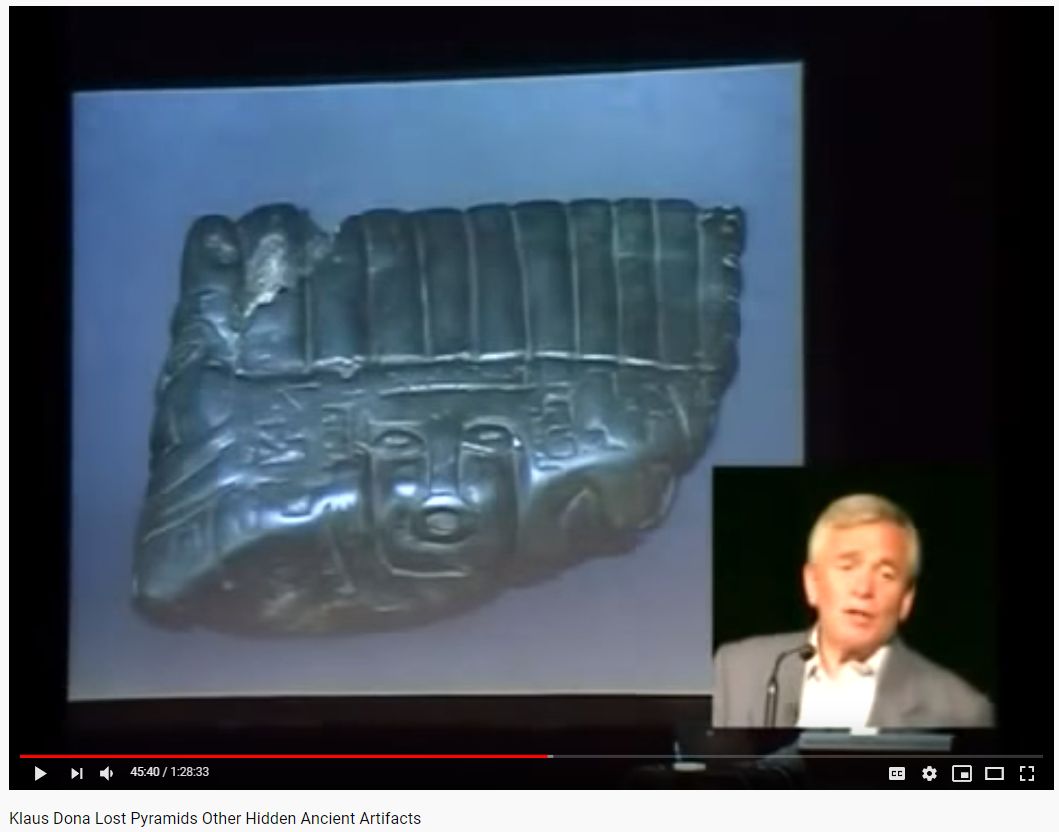
Water vibrated by Metal
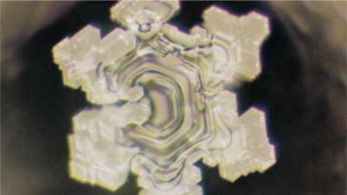
Water vibrated by Mozart
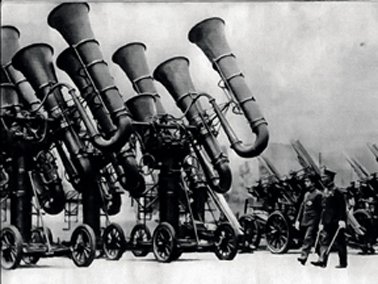
The weaponization of sound: TED Talk video with an inventor of silent sound spread spectrum type technology. Sound that doesn't emanate from the speaker surface but materializes from high-frequency beat patterns in the air along along a LASER-straight, focused beam that does not fade with the inverse square law or suffer air-related distortions. Pinpoint sound destinations. True binaural playback at great distances. Turn up above about 80dB and the air itself begins to distort the sound being transmitted, in fashion of doppler modification.
"War is the principal motivational force for the development of science at every level, from the abstractly conceptual to the narrowly technological. Modern society places a high value on "pure" science, but it is historically inescapable that all the significant discoveries that have been made about the natural world have been inspired by the real or imaginary military necessities of their epochs. The consequences of the discoveries have indeed gone far afield, but war has always provided the basic incentive." --Report From Iron Mountain
See also CNN: Norwegian boy fends off wolves with Creed song - Gibson: Creed - Not Megadeth - Prevent Wolf Attack
... a story describing how a 13-year-old Norwegian boy was saved from a wolf attack by playing a Megadeth song on his phone. More details have emerged and it turns out the boy actually prevented the attack by playing a tune by Creed. Walter Eikrem, who lives in the town of Rakkestad, was walking home from school when four wolves entered his path. Eikrem was listening to Creed's "Overcome" and he decided to remove his headphones and turn the volume up to try and keep the wolves away, according to NME.com. He said that the animals "didn't really get scared, they just turned around and simply trotted away." Although wolf attacks are not common in Norway, the animals are often spotted in the countryside. Eikrem remembered some advice he had learned previously about how to survive a wolf encounter: "The worst thing you can do is run away because doing so just invites the wolves to chase you down," he said.
See also Michael Walton's research into cymatics, and watch John Stewart Reed on TED: "An almost magical tool...a looking glass into a hidden world. ...sound does have form, and we've seen that it can affect matter and cause form within matter..."
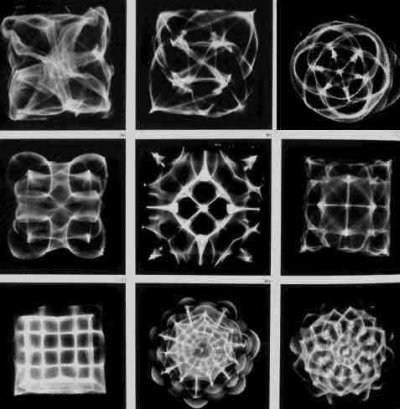
Cymatic Experiments - Harmonics - Atomic Alignment - Sacred Geometry - Nature's Art - Visualizing "OM" and Gregorian Chants recorded in the Great Pyramid
See also Dr. Len Horowitz on Coast to Coast, and see DLH website and i528tunes.com which offers original music performed in C528 and also offers "autotune"-like remapping of A440 music to C528.
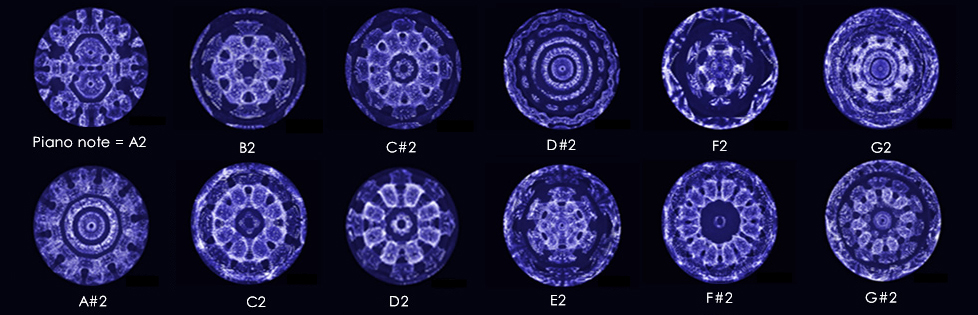
- "A painter paints pictures on canvas. But musicians paint their pictures on silence." -- Leopold Stokowski
- "As with everything in technology, once the new technology comes in, then people abuse it because they can do things they could never do before. I think we're getting to a point now where we realize that loud is not better. Everything used to be squeezed into this very narrow bandwidth, which meant the quietest and the loudest sounds were not very far apart...When everything is loud...your ears get tired and it creates a kind of energy that maybe you don't want...You don't realize that when you turn it off, there's a relief, because you're agitated emotionally just because it's such a loud sound, like being in a steel factory or something." --George Lucas, Mix magazine, Nov. 2004
- "...[invest in] the highest-quality finish on films. That's where you really make or break a movie -- I feel that sound is half the experience. Filmmakers should focus on making sure the soundtracks are really the best they can possibly be because in terms of an investment, sound is there you get the most bang for your buck." --George Lucas, Mix magazine, Nov. 2004, p. 88
- CD vs. LP :: "This finding supports my own subjective impressions comparing the CD against the LP. I much prefer listening to the LP over the CD on my system. The CD sounds dull, congested, muddy, and lacking in dynamics. If I push up the volume, the sound becomes noticeably harsh and artificial. The LP on the other hand sounds more 'dynamic' and 'exciting.'" --Christie Tham, Comparison of CD, DVD, SACD article: part 1 • part 2 • part 3 • part 4
- "Everyone is in love with the way vinyl sounds." --Tom Biery, Executive V.P. for Promotion, Warner Brothers Records, source
- Most pop-culture modern music is artificially hyped up, just like the super nicotine in cigarettes. "Record companies are using digital technology to turn the volume on CDs up to '11'.", source
- "Everything is loud, everything is bright, there's no subtlety in it at all, it's a sound that one would tire of fairly quickly." -- Steven Hoffman, specialist at remastering classic rock albums, source 2007
- "The music available today isn't musical at all. It's best described as anti-music. It's anti-music because the life is being squashed out of it through over compression during the tracking, mixing, and mastering stages. It's simply, non musical. It's no wonder that consumers don't want to pay for the CDs being produced today. .... It's time for all of us in the music industry to wake up! Our musical heritage is being threatened by this wave of anti-music." --Bob Speer, "What Happened to Dynamic Range?"
- "Wimpy, loud sound: All the punch ... is gone, along with much of the feel of the music that comes with some parts being louder than the others. When there's no 'quiet' there can be no 'loud'." --The Loudness Wars explained and demonstrated in under two minutes. A recent Mastering HOWTO showing the focus is all about maximizing loudness. See also Gateway Mastering
- Turn Me Up -- "To preserve the excitement, emotion and dynamics of the original performances..." -- A non-profit music industry organization campaigning to give artists back the choice to release more dynamic records. The goal is not to discourage loud records but to encourage awareness of and choice for much greater dynamism.
- The Loudness War Analyzed - Paul Lamere, Music Machinery Music & Technology Blog - Spectral/Loudness graphs of numerous songs presented and analyzed: "Recorded music doesn't sound as good as it used to. Recordings sound muddy, clipped and lack punch. This is due to the 'loudness war' that has been taking place in recording studios. To make a track stand out from the rest of the pack, recording engineers have been turning up the volume on recorded music. Louder tracks grab the listener's attention, and in this crowded music market, attention is important. And thus the loudness war - engineers must turn up the volume on their tracks lest the track sound wimpy when compared to all of the other loud tracks. However, there's a downside to all this volume. Our music is compressed. The louds are louds and the softs are loud, with little difference. The result is that our music seems strained, there is little emotional range, and listening to loud all the time becomes tedious and tiring."
- Guns 'N Roses: Dynamics And Quality Win The Loudness Wars - Bob Ludwig, Mastering Engineer - Gateway Mastering & DVD
- Fans Complain After "Death Magnetic" Sounds Better On Video Game Than CD - Rock & Roll Daily, Rolling Stone Magazine
- The Death of High Fidelity - Robert Levine, Rolling Stone: "Over the past decade and a half, a revolution in recording technology has changed the way albums are produced, mixed and mastered - almost always for the worse. 'They make it loud to get [listeners'] attention'... Engineers do that by applying dynamic range compression, which reduces the difference between the loudest and softest sounds in a song. ... relying too much on this effect can obscure sonic detail, rob music of its emotional power and leave listeners with what engineers call ear fatigue. 'I think most everything is mastered a little too loud... The industry decided that it's a volume contest.'"
- Will the Loudness Wars Result in Quieter CDs? - Tim Anderson, The Guardian: Florida-based recording engineer Charles Dye, whose mixing and recording credits include Bon Jovi, Jennifer Lopez and Shakira, hopes to bring about change with a new initiative called Turn Me Up (turnmeup.org), co-founded with musician John Ralston and studio owner Allen Wagner. The aim is to address the anxiety felt over recordings which are quieter than their competitors.
- Loudness War - Wikipedia
- For Tom Petty Fans, the True Sound of Vinyl, Also Captured on a CD - Robert Levine, New York Times: "Everyone is in love with the way vinyl sounds." --Tom Biery, Executive V.P. for Promotion, Warner Brothers Records
- Why Music Really Is Getting Louder - Adam Sherwin, Times Online
- How CDs Are Remastering The Art Of Noise - Tim Anderson, Guardian Unlimited
- Why New Music Doesn't Sound As Good As It Did - Yahoo! Tech
- The Loudness War - Mark Donahue, Performer Magazine
- Loudness - Chicago Mastering Service
- "Remember putting 'Dark Side of the Moon' on the turntable or slipping 'Graceland'" into your CD tray? Your kids won't. Not only will the concept of music delivered via molecules--hard media--seem totally 20th century, but the entire concept of an album (let alone a 'concept album') will be lost on them. Over the past decade, sales of complete albums--even the nonmolecular versions--declined 55 percent to less than 400 million in 2009, according to Nielsen SoundScan. During roughly the same period, sales of individual digital tracks have soared from zero to nearly 1.2 billion. Apple iTunes and file-sharing networks have nearly obliterated the notion of listening to more than one song by one artist in a row." Sources: 1 2 3
- Oral History of the Audio Engineering Society - Snippets from video interviews with numerous industry luminaries - watch Les Paul's AES interview snippet and appearance with David Letterman ("Oh, this was the Devil" at 4:54 into video).
-
From Mao to Mozart, using western classical music as a passport to China, 1979 documentary. Very telling is the overriding concern with dynamics and expression:
- 10:00 in: "At the beginning of the rehearsals, the musicians were a little stiff, a little uncertain, and more than a little wary. Their approach to Western classical music was somewhat limited: They were not accustomed to playing with passion and variety of color. They had and old-fashioned and technical approach towards the manner in which they played their instruments...but with an almost instant understanding and reaction to a given musical stimulus -- once they were shown what might be done. They have not had the experience of living with western music for hundreds of years as we have."
- 19:00 in: "One sings, usually, very naturally. You must always listen as if you were hearing something very beautiful, then you must figure out how to do it here [play it such]...play it as if you were singing it: sing in mind, then play as you sign. [Control of twist (yaw) on the violin is very important.] The listener must always hear exactly where the phrase goes."
- 55:00 in: "They don't understand the music better much, they just play the notes. Most of the students want to play something difficult. Everything must be fast, loud, noisy. They think that if they can play something difficult and fast they can get a good job. Everyone will get a job after graduation, but some jobs are better than others. So everybody strives to play something difficult to show, 'I'm the best player.'" "Technical excellence alone is not enough; the mind must be free to create what the composer had in mind. There must always be life to every note. There is not a single casual note in music - every note has a reason. ...You're having a conversation, you're saying something."
- 1:03:00 in: Interesting anecdote about politics, cultural revolution: "They're trying to get power, to get control over the music. ...I was treated as a criminal; we were sometimes treated as animals...the torture of the mind, and the humiliation. We were treated as criminals because we taught [our students] western music." -- deputy director music conservatory in Shanghai
- 1:12:00 in: "[Paint with the brush. Not driven into the instrument.] Music is not black and white. It is every color, and some that even painters don't have."
- 1:14:00 in: "What is music all about? The instrument is not that important. It is only a means to an end -- in other words, you don't use music to play the violin, you use the violin to play music. ...Dancing. ...The line [phrase of music] is more important than just playing one note after another."
- 1:18:00 in: "Every time you take up the instrument, you are making a statement, your statement. And it must be a statement of faith: that you believe this is the way you want to speak. Unless you feel that you must live with music, that music can say more than words, that music can mean more, that without music we are not alive -- if you don't feel all that, don't be a musician." -- Isaac Stern, violinist, 1:18:00 into From Mao to Mozart
- 1:19:00 in: "If I have been critical, it is only to share with you my faith, my abiding belief, in both music and young people. I believe between the two of them, the world is a better place." -- Isaac Stern, violinist, 1:19:00 into From Mao to Mozart
- "No one has ever had to sweep up after listening to music." -- John Michel Jarre -- Michael Schneider
- "Sound is the medicine of the future." - Edgar Cayce -- "Dr James Gimzewski, of UCLA, California, has taken a revolutionary approach to studying cellular function. He uses an atomic force microscope, a kind of super-sensitive microphone, to listen to the sounds emitted by cells. The focus of this new science, called a sonocytology, is mapping the pulsations of the cell's outer membrane, thus identifying the songs of the cell. Gimzewski's work has revealed that every cell in our bodies has a unique sonic signature and 'sings' to its neighbors. Sonocytology is a potentially powerful, diagnostic tool for identifying the sounds of healthy cells versus those of injurious ones. But it introduces an even more exciting prospect: the ability to play the destructive sounds of rogue cells back to them greatly amplified, so that they implode and are destroyed. In this scenario there would be no collateral damage to surrounding tissue since healthy cells would not resonate with these frequencies." -- Sound Healing on cymascope.com
- 'Our cells whisper to each other.' - Dr. Jose Delgado
Graph showing volume level of 1983 CD: sound is not highly compressed or "maximized": notice the relative differences among the peaks and troughs and how the signal does not fill the entire graph: There is headroom.
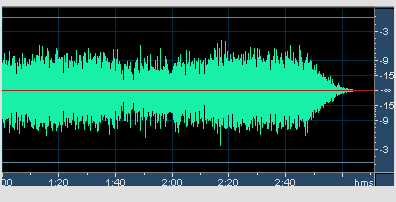
How long do you enjoy listening, when everything is screaming loud?
Graph showing volume level of 1999 CD: sound is totally ruined: notice how everything is shouting loud (and therefore nothing is relatively quiet) and how the signal is pushed unnaturally (and unpleasingly) to fill the entire graph. When the music blares at full blast no matter the number or volume of instruments is it still music? At least one entire dimension is lost, compressed into homogeneity.
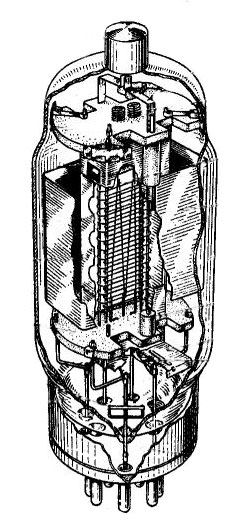
- "The subjective correlation between Total Harmonic Distortion (THD) and what you actually hear is close to zero. After all, a low-fi rack-stereo receiver has far lower THD than the best-regarded triode amplifier. Does that mean that "all amplifiers sound the same?" No, certainly not ... Is the converse true - that measurements are meaningless? No, that's not true either; there are plenty of amplifiers with terrible measurements that do indeed sound terrible. . The fault is not with the subjective perception of the listener, but rather in the measurement itself...you can measure all you want, but a mass spectrometer isn't going to find a lot of difference between lunch at a high school cafeteria and the best dinner at a four-star restaurant. To foolishly assert that the mass-spectrometer is right and the restaurant customers are all deluding themselves is an example of simple ignorance trying to cover its nakedness with the fig-leaf of Science. ... All we can say for certain right now is that simple THD figures are not the right measurement for electronics!" --Lynn Olson, The Sound of The Machine, 1997-2003 ( source )
- Interesting excerpts from Lynn Olsen's "The Sound of the Machine: The Hidden Harmonics behind THD": "...how traditional measurements result in unwise decisions for amplifier design. The lower harmonics are nearly inaudible compared to the upper harmonics, yet they dominate almost any THD measurement! The meter is steering the designer, the reviewer, the dealer, and the consumer away from good sound."
- The Components of Sound A summary of factors affecting sound quality.
- 'Amp Defects Not Covered by Specs' by Norman Crowhurst
- The Perception of Pitch PDF, Frederic L. Wightman, David M. Green, American Scientist vol. 62, Mar. - Apr. 1974, pp. 208-215
- Essential Differences Between Good & Bad Guitar Sound by Dr. Samo Sali, Jul. 2004 salilab.org
- A New Methodology for Audio Frequency Power Amplifier Testing Based on Psychoacoustic Data that Better Correlates with Sound Quality, 2001 Masters Thesis by Daniel H. Cheever PDF An investigation of the hypothesis that accepted measurements of quantifying amplifier fidelity fail to correlate well with subjective sound quality. ... Specmanship rears its ugly head throughout the history of audio. As higher power density output devices (lower cost per watt) became available they were always less linear and so more required more negative feedback to correct. The more feedback, the sharper the onset of clipping, and the more abruptly higher-order audible distortions are introduced.
- The Look of Distortion adapted from Steve Bench
- Sound of Distortion by Jean Hiraga, Glass Audio magazine, May, 2005
- Waveforms, seen and heard in Reason adapted from psylux.com
- Listening to Fourier Series -- Interesting examples of tone, harmonics and phase.
- Browser / Java Tone Synth -- Lets you pick a fundamental tone then add or subtract some percentage of harmonics, first through eighth. Think you can't hear 0.01% THD of the first harmonic?
- Science and Music by Sir James Jeans, Cambridge University Press, 1937: The timbre depends only on the relative energies of the various harmonics and not on their phase-differences. Differences of phase produce no effect on the ear. Colud tihs be due to an ecfeft saliimr to the alitbiy of msot ppleoe to raed smlbcraed wdros as lnog as teihr ladnieg and trliniag lteerts are crrecot? See/listen: Listening to Fourier Series
-
A Future Without Feedback Stereophile magazine, January, 1998:
"Some aspects of perceived sound quality are not explained by established theory. There is a growing suspicion that some of these aspects --a loss in natural timbre; a duller, less expressive performance; increased aural fatigue; and missing life and energy in reproduced sound-- may be consequences of the application of negative feedback. Many of us working in the audio industry have long been aware that measurements do not fully describe sound quality. Moreover, it seems that measurements fail to describe some of the more important aspects of subjective perception. For example, we may guarantee that an amplifier will have a perfectly flat frequency response under normal conditions of use, yet we cannot explain why it may still sound duller or brighter than another comparably 'flat' amplifier.
"We can measure crosstalk, channel separation, distortion, and noise to incredibly low levels, yet we cannot explain why some amplifiers have greater perceived stereo depth, resolution of detail, and low-level ambiance than others. While we know that 0.3-0.5% of third-harmonic distortion is just audible in the midrange, how can the overall sound of a tube amplifier be judged "just fine" when we can measure 1.5% of second harmonic and 0.8% of third at moderately high listening level? Still more intriguing is the matter of dynamics. Some electronics sound flattened and dulled in terms of musical expression; others may be wonderfully revealing of this quality even at quiet sound levels. Or consider rhythm and timing: One power amplifier gets your foot tapping, another leaves you reading the sleevenotes. I can identify no measurement associated with rhythm or musical dynamics.
-
Scientists vs Audiophiles, Stereophile magazine, March, 1999, condensed:
I'm not claiming that spooky or mystical events occur when you listen to your system. ... Every link in the chain, from the vibration of your stylus to the goose bumps on your arms, is grounded in physical processes. ... But that doesn't mean that we understand exactly what those processes are - especially the ones inside the brain. ...
You can stand behind complicated truths or you can cling to simple mistakes. Those who feverishly insist that science tells us everything about audio treat science as an exact, finished product. But, any good scientist will tell you that there's much more in the world that we do not understand. Close examination almost always reveals increasing complexity. ...
Some dissenting scientists and engineers may not immediately appreciate good audio, much as people who go to museums but have no idea why Picasso, Pollock, or Rothko are good painters. They're seeing exactly what everyone sees, but they're seeing it quite differently. ... Some may never be able to see why Picasso is a great painter or appreciate high-end audio; they remain rigid, unconvinced and unconvincible.
- "Substance is something I never appreciated until I had decades of experience under my belt. A discount lens usually offers more features like faster speed or wider zoom range for less money. Likewise, cheaper cars usually offer better specifications, like fuel economy, horsepower or number of radio presets, for a lower price than, say, a Mercedes. You may realize that the Mercedes has a lot more substance and fundamental quality for which there is no numeric specification, and so you probably understand why a Mercedes costs more and delivers in ways not typically measured." -- adapted from Ken Rockwell on photographic lenses, specifications and quality
- THD, Power and Perceived Loudness
- AutoStylin magazine Tech-Corner article ( PDF, pp. 45-48 )
- Think of it as a Sparkplug for your Car Audio System
- Why Tubes?
- Summary of Sound Therapy and Vibrational Healing Concepts I - a compendium of interesting articles concerning History of Sound, Frequency Therapy, Harmonics, and Musical Scales and Relationships.
-
R. G. Keen's article on Using the Carbon Comp Resistor for Magic Mojo:
"...the resistance actually varies with the voltage across the resistor. The resistance is actually different if you put 100V across the resistance than if it's got 0V across it. What that means to us is that if you put a 50V DC level across a [carbon-composition] resistor and a 100V sine wave superimposed on that, the sine wave will be measurably distorted by the resistor itself. We have resistor distortion. The distortion is pretty much pure second harmonic. In small amounts, you can't hear second harmonic as distortion, only a certain amount of "sweetening" or liquidity to the tone. That's what carbon comp resistor mojo really is...
- Weckl, Gadd, Colaiuta and Snare Tuning
-
Luke Manley's comments on unusual design, Absolute Sound Magazine, October 2009, p. 79
On transformers and multiple output-taps: "Multiple output taps are inherently a serious compromise in performance. Inactive winding-segments are inevitable in a tapped transformer and result in additional leakage inductance that affects high-frequency response. ...the negative feedback loop is designed to encompass the whole transformer; tapping the secondary would upset the feedback ratio and cause only parts of the secondary to be used, which would result in sub-optimal power transfer. Speaker impedances vary with frequency; in order to have the optimal match it is best to choose a secondary impedance at the minimum impedance of the loudspeaker."
- "I had also determined through trial-and-error experiments over the years that the amplifier is sonically the best component to connect to earth ground, not the preamp (as is stated in some texts) or any other component of the system. While one-time TAS writer, Enid Lumley, is credited by Laura Dearborn's classic audiophile text, Good Sound (William Morrow & Co., Inc., New York, NY, 1987, p. 229) for the amplifier-is-the-best-spot theory, this is an error. Enid Lumley was in fact adamant in her writings that ALL earth grounds should be cheated for best sound. And while I agreed with her in 1987, once I moved to a residence which I had made sure had a properly implemented copper grounding rod as an earth-ground reference, and as the environment has become increasingly polluted with RFI and EMI from modern electric and electronic devices, classic single-point grounding at the amp had always sonically trounced floating all the earth grounds."
- Bill Whitlock of Jensen Transformers explains, What is "Ground"? and touches on unbalanced vs. balanced signals, current paths, and audio interfacing. Bill Whitlock on ground loops, hums, buzzes.
-
An interesting paper on how differential digital non-linearity, slightly or totally unfiltered in so-called "upsampling" D/A conversion (which has no "brick-wall" digital or steep analog filtering to block oversampling frequencies above 22kHz), acts as a partially or fully uncorrelated (random) noise that 'fills in the gaps', somewhat like a 'shadowing dither', making a comparatively hard and sterile recording played back through stiffly (technically properly digitally) filtered DACs instead become "dramatically improved", the random ultrasonics being eventually filtered by various incidental analog losses (audio system, speaker cone, air, ear, etc): Theory of Upsampled Digital Audio, Doug Rife, DRA Labs:
"Anecdotal evidence suggests that certain upsampling DACs sound better than others. This is to be expected based on the lack of understanding of why upsampling works,even by those who design upsampling DACs. In the light of the theory presented here, certain ultrasonic roll-off characteristics should provide a statistically more effectivesignal-dependent ultrasonic dither than other roll-off characteristics. In particular, enough ultrasonic image energy must be present to sufficiently dither the DAC all the way to the Nyquist frequency at the output sampling rate. Otherwise, the benefits of upsampling to very high output sampling rates will not be fully realized. On the other hand, too much ultrasonic energy can raise the noise floor of the DAC enough to be audible. It may turn out that a rigorous mathematical analysis of upsampling would discover an optimum digital upsampling filter characteristic that maximizes the effectiveness of the signal-dependent ultrasonic dither provided to the DAC. ... The sound quality of 44.1 kHz digital audio data can be dramatically improved by employing a 'poor' oversampling digital anti-imaging filter having a slow roll-off in place of a 'good' digital filter having a fast roll-off and a high stop band attenuation. It was shown that the ultrasonic images output by this 'poor' filter is responsible for the improved sound quality, reducing certain forms of non-linear distortion such as that due to the differential non-linearity found in all DACs. There may very well be other, subtler, forms of non-linear distortion in DACs, which may also be reduced by signal-dependent ultrasonic dither. In any case, there are certainly many other sources of non-linear distortion present in the signal chain. Some may question how such a small reduction in non-linear distortion due to differential non-linearity in DACs can be heard when much larger nonlinear distortions are generated by loudspeakers, for example. The answer is that the non-linear distortions in question, like jitter-induced non-linearities, are uniquely digital in origin. Such digital distortions have no counterpart in the analog domain. It can be argued that human hearing is much more sensitive to certain digital forms of distortion as compared to the more common distortions of analog origin. For example, it is widely recognized that very low levels of jitter are audible even in the presence of much larger levels of harmonic distortion generated by loudspeakers."
Printed in 2000 and 2002, almost 20 years after "perfect" CD audio stormed the world, here's yet more late-coming evidence that the more we 'know', the more we don't quite understand, and that extremely minute and fleeting but highly unnatural distortions stand out starkly. - Savart Journal - science and technology of stringed musical instruments
- Visual Comparison of Ensemble Averaged Transverse Arching Profiles of Golden Age Cremonese Violins and Curtate Cycloid Curves - R.M. Mottola
- Stradivari violins exhibit formant frequencies resembling vowels produced by females - Hwan-Ching Tai, Dai-Ting Chung
"Over the past two centuries, violins made by Antonio Stradivari (1644-1737) have been more favorably received by concert violinists and instrument collectors than instruments by any other maker. Some suggest that Stradivari's success can be attributed to unique tonal characteristics, generally described as brilliance ... modern research has yet to clearly identify acoustic differences between Stradivari violins and other professional quality instruments. Since both violin tones and spoken vowels are perceived through steady-state spectral features, we hypothesized that voice analysis techniques may help elucidate the tonal properties of violins. ...we examined the recorded scales of four Stradivari violins and ten other professional quality instruments, both old and new. On most violin notes, there are typically four or five resonance peaks (formants) below 5.5 kHz. Generally, professional quality violins exhibit formant frequencies (F1-F4) which are equidistant from the formants of male and female voices. But Stradivari violins tend to produce higher formants which are closer to female voices. Stradivari violins also show greater probabilities to emulate the formants of bright-sounding front vowels spoken by females, a tendency shared by other violins judged by concert violinists as having Strad-like tonal characteristics. Our results suggest that ... there are measurable and statistically significant differences between Stradivari violins and other professional quality violins in terms of formant features. Having higher formants or having formants that resemble female vowels may be acoustic correlates of the tonal qualities which concert violinists frequently associate with Stradivari violins."
- Detection of Bow Direction and Stopped String Length by Analysis of Asymmetric Helmholtz Velocity Data from a Magnetic Violin Pickup - John Silzel
- Comparison of Arching Profiles of Golden Age Cremonese Violins and Some Mathematically Generated Curves - R.M. Mottola
- Modeling and Optimizing of the First Guitar Mode - Samo Sali
- Parameter Estimation of Multiple Non-Linear Damping Sources in Guitar Strings - Jonathan Wesley Christian


- Milbert Amplifiers offers an official mirror of Frank Philipse's extensive tube datasheet and information archive
- Speaker Wattage vs. Efficiency vs. Sound Pressure Level
- Secrets of Amplifier and Speaker Power Requirements Revealed
- Fantastic site on audio engineering info: Lenard Audio
- Introduction to Sound Recording, Geoff Martin's excellent book online
- How Tubes Work, Briefly - adapted from an article by John Simonton. Mentions space charge, electron cloud, self-biasing, and "Brown Sound" of starved-plate operation.
- Motorola, Lear Jets, 8 Tracks, and Early Car Audio recording-history.org
- "Anyone who has had actual contact with the making of the inventions that built the radio art knows that these inventions have been the product of experiment and work based on physical reasoning, rather than on the mathematicians' calculations and formulae. Precisely the opposite impression is obtained from many of our present day text books and publications." --Edwin H. Armstrong
- "I think a famous French mathematician and physicist was guilty of only slight exaggeration when he said that no discovery was really important or properly understood by its author unless and until he could explain it to the first man he met on the street." --Sir J.J. Thomson
- "...before you attempt to use any effects or tone-shaping devices, you must dial in a flat-response clean tone on the amplifier that you'll be using. I'm positive that most guitarists out there actually use amplifiers that were designed for guitarists (a guitar amp). But did you know that some guitarists prefer to use keyboard amplifiers or even bass amplifiers to help them achieve pristine and pure, clean tones? It's true! The reason it's crucial to attain a pure, clean tone prior to adding other effects to your signal is for better overall tonality. If you can find a clean-sounding amplifier ... then anything that you add to the signal path ... should accentuate what you natural electrified-guitar tone sounds like. Simply put, if your [guitar] sounds good when plugged directly into your amp, anything additional should only improve the sound." --David M. Brewster, "Introduction to Guitar Tone and Effects", page 14
- John Atwood's research into the history of world power mains and frequencies: "The frequency of the power we get out of our electric outlets has been fixed since time of our grandfathers or great-grandfathers, at least in the developed world. Yet we are aware that there two standards in the world: 50 and 60Hz, and we may have heard of other frequencies, such as 25Hz, 400Hz, and even DC. One country, Japan, even has both 50 and 60Hz. Where did these frequencies come from? Is one better than the other? What explains the geographical distribution of these frequencies? This article will give the history of the frequencies and try to answer the questions above. ... Early AC alternators were belt-coupled to steam engines, so it was easy to increase the speed of the alternator relative to the engine. For larger and more reliable systems, direct-coupling was needed, but a 133Hz alternator would require many poles. A lower frequency would be better here, but if it was too low, arc lamps would flicker. A frequency of 50Hz was suggested, but it was felt that even this would cause flicker, so 60Hz was chosen. It is rumored that Tesla wanted 60Hz due to his obsession on the number three and all things related to it. In 1890, Westinghouse and Thomson-Houston (one of the predecessors of General Electric) chose 60Hz as a standard for lighting. 50Hz found favor in Britain and Europe, and was used in Southern California (by Southern California Edison) until the late 1940s."
- Origins of 60 Hz as Power Frequency by Edward L Owen IEEE
- History of Recording
- Picking Capacitors, part 1 and part 2 by Walt Jung and Richard Marsh. Great info on how capacitor properties relate to capacitor material and construction, and how that potentially impacts audio fidelity and sound quality.
- Capacitor Field Guide by Harry R. Bissell, Jr., describes types of capacitors, characteristics and applications.
- Interesting article about the foibles of cranky op-amps.
- Op-amp Distortions [PDF]
- Damping Factor by George Augsperger, JBL, Electronics World, Jan. 1967
- Cathode Phase Inversion PDF, Otto H. Smith, 1941
- The Fleming Valve
- Amplifier Fundamentals PDF, AGO 4239A
- An Ultra-Linear Amplifier PDF, David Hafler, Herbert I. Keroes, Audio Engineering, 1951
- Harmonic and Intermodulation Distortion PDF, J. N. A. Hawkings, 1988
- Dave McGowan's interesting research into Laurel Canyon and the "hippie" music scene
- Loudspeaker Nonlinearities - Causes, Parameters, Symptoms [PDF] -- Addresses the relationship between nonlinear distortion measurement and nonlinearities which are the physical causes for signal distortion in loudspeakers, headphones, micro-speakers and other transducers. Using simulation techniques characteristic symptoms are found for each nonlinearity and presented systematically in a guide for loudspeaker diagnostics. This information is important for the interpretation of nonlinear parameters and for performing measurements which describe the loudspeaker more comprehensively. The practical application of the new techniques are demonstrated on three different loudspeakers.
- Physics of Music course - Online course notes covering music scales, chords, cents, flutes and wind instruments, acoustics in ducts, tubes and rooms, reverb, diffusion, white noise and other related information.
- "White" noise is random signal levels at all frequencies. The lower octaves contain fewer frequencies than the upper octaves (20-40Hz contains 20 integer frequencies, while 8kHz-16kHz contains 8,000 integer frequencies, or 400 times more). Therefore, white noise sounds bright or top-heavy; whereas, "pink" noise, which is attenuated 6dB per octave, is compensated for the apparent brightness to sound more evenly balanced.
- "Design, by nature, is a series of trade-offs. Every choice has a good and bad side, and you make your choice in the context of overall criteria defined by necessity. Good and bad are not absolutes, however. A good decision in one context might be bad in another." --Allen Holub
- "American Wire Gauge (AWG) is the standard used to represent successive diameters of wire. The system is based on the establishment of two arbitrary sizes: 0000 (4/0 or '4-aught') defined as exactly .4600-inch diameter and 36, defined as exactly .0050-inch diameter. The ratio of these two sizes is 92 and the sizes between the two are based on the 39th root of 92, or approximately 1.123, so the nominal diameter of each gauge size increases approximately by this factor between AWG 36 and AWG 4/0 and decreases by this factor between AWG 36 and AWG 56, which is the smallest practical diameter for commercial magnet wire. Nominal wire diameters to AWG 44 are rounded to the fourth decimal place and aren't necessarily rounded to the nearest digit." source
- How loud is 50 watts? With human perception it sounds only twice as loud as 5 watts, and it sounds only half as loud 500 watts (and only 1/4th as loud as 5,000 watts). Here's a list of how humans perceive power.
-
Static Shock: The human body provides a small capacitance relative to the Earth ground, allowing build up of static electric charge. Discharge current is limited by tissue and skin impedance, modelled by a 100 pF capacitor in series with a 1.5 k Ohm resistor. Mundane actions can generate surprisingly high voltages, as shown in the following table (Motorola Power MOSFET Data Book):
Action: 10-20% rel. humidity 65-90% rel. humidity Walk, carpet: 35,000 Volts 1,500 Volts Pick up poly bag: 20,000 1,200 Move in foam chair: 18,000 1,500 Walk, vinyl floor: 12,000 250 Handle vinyl envelope: 7,000 600 Work at bench: 6,000 100 - Photo tour of tube factory in Shuguang, China.
- What is a decibel? Extensive information presented by University of South Wales. See also Music Acoustics FAQ
- 12AX7 equivalents and other information
- The Matterhorn is a subwoofer model completed in March 2007 by Danley Sound Labs in Gainesville, Georgia after a U.S. military request for a loudspeaker that could project infrasonic waves over a distance. The Matterhorn was designed to reproduce a continuous sine wave from 15 to 20 Hz, and generate 94 dB at a distance of 250 meters (820 ft), and more than 140 dB for music playback measured at the horn mouth. It can generate a constant 15 Hz sine wave tone at 140 dB for 24 hours a day, seven days a week with extremely low harmonic distortion. The subwoofer has a flat frequency response from 15 to 80 Hz, and is down 3 dB at 12 Hz. It was built within an intermodal container 20 feet (6.1 m) long and 8 by 8 feet (2.4 x 2.4 m) square. The container doors swing open to reveal a tapped horn driven by 40 long-throw 15-inch speaker drivers each powered by its own 1000-watt amplifier. The manufacturer claims that 53 13-ply 18 mm 4-by-8-foot (1.2 x 2.4 m) sheets of plywood were used in its construction... Of the constant tone output capability, designer Tom Danley wrote that the "target 94 dB at 250 meters is not the essentially fictional 'burst' or 'peak SPL' nonsense in pro sound, or like the 'death burp' signal used in car sound contests." At the annual National Systems Contractors Association (NSCA) convention in March 2007, the Matterhorn was barred from making any loud demonstrations of its power because of concerns about damaging the building of the Orange County Convention Center. Instead, using only a single 20 amp electrical circuit for safety, visitors were allowed to step inside the horn of the subwoofer for an "acoustic massage" as the fractionally powered Matterhorn reproduced low level 10-15 Hz waves.
- On the matter of "cathode stripping"
"Fluoro tubes also have directly-heated coated cathodes. Where I worked we made some really good quality inverters to allow 15 watt tubes to run from a 24 vdc supply. We paid close attention to pre-heating the cathodes before the high voltage was applied to the tube. In one particular test that ran for about 6 weeks, on a 3 seconds on, 7 seconds off basis we got over 350,000 starts(!) from the tube before we gave up and decided it was good enough. Tube was still running OK. We then tried it using using no preheat time and the tube would fail in about 2 days. During the test you could see the tube ends gradually going black from the cathode material being splattered on the inside surface of the glass. Gradually the emission would be concentrated in a smaller and smaller area of the filament and it would eventually melt and go open circuit at this point. Not exactly the same as a high-vacuum valve but from that it would seem the best way to protect your expensive bottles is to get the cathodes up to operating temperature, then ease the HT on over several seconds."
"How much energy is required to strip an electron from an atom? Who knows BUT this experience sort of relates: I run a 14 dynode photomultiplier tube with 2200 volts anode to cathode as the sensor in the receiver of a Laser Airborne Depth Sounder System (Hydrographic Survey). As the tubes age and some gas gets in we see increasing "afterpulsing". This is when a "photo" electron being accelerated up the tube, toward the anode, hits a residual gas atom (probably Helium), stripping off an electron and turning it into a positively charged ion. This ion is then accelerated back the other direction and smashes into the photocathode, busting loose a few electrons which then acccelerate up to the anode, causing a false "after pulse". Space charge saturation (electron cloud) around the cathode won't do anything to impede a positively charged ion getting back to the cathode. I've been trying to get the photomultiplier tube manufacturer to add a Titanium getter for years - Titanium has a HUGE affinity for Helium. As it is we just change the tube every 3 to 4 years (maximum)."
John Atwood: "Cathode stripping isn't really a literal stripping of the cathode, but, as mentioned earlier, a bombardment of the cathode by positively-charged ions at a point during warm-up where there is enough cathode emission to start a flow of electrons, but not enough to form a "space charge" around the cathode, which tends to protect it from the positive ions. Since the ions have a large mass relative to the electron, they can physically damage the cathode coating, which is quite fragile. When the cathode is activated during manufacturing, trace elements migrate to the surface and create the efficient electron emitting layer. Without activation, an oxide-coated cathode is essentially inert. Also, certain ions, such as sodium and sulphur, can "poison" the cathode, causing much worse damage than just routine stripping. The usual effect of cathode stripping is a shortening of the useful life of the tube, although rectifiers can create fireworks inside during warm-up. Thoriated-tungsten cathodes are also susceptible to cathode stripping, since they have a monatomic layer of thorium on top of the tungsten that can be damaged by positive ions. However, by running the cathode over temperature, new thorium can migrate to the surface. The schedule for re-activating thoriated-tunsten tubes differs, depending if the filament is "carburized" or not. I believe that most modern thoriated tungsten tubes (211, 845, 811A, etc.) are carburized. Pure tungsten filaments are immune to cathode stripping, but these are rare and were only used for very high-voltage tubes. Contrary to the urban myth, gas (at least our atmosphere) doesn't leak through glass. Helium can permeate through glass, but is rather slow. According to Kohl's Materials and Techniques for Electron Tubes (1960), the permeation velocity of helium at 100 degrees C through lime glass (used for the bulb) is about 10E-13. (Permeation velocity is ml of gas per second per cm^2 per mm of thickness.) Atmospheric gasses are essentially impermeable. Most gas in a tube comes from degassing of glass and metals caused by heating during operation. The getter coating does work all the time, but will work better at higher temperatures, up to a point. Gas is reduced in a tube during operation by a process called "clean-up" which is essentially the gas molecules getting trapped in the plate by electrons hitting the plate. An existence proof of the impermeability of glass are the N.O.S. tubes from the 1920s and 30s that work just fine out of the box. A delayed B+ turn-on is a good idea, especially for power tubes. An alternative, which I have used in some of my designs, is to apply a high negative bias to the grid during warm-up, then after a delay, drop the bias to the normal level. With the high bias, the tube is cut-off, and any stray positive ions would go to the grid, thus the cathode is protected. This works well with the Amperite thermal time delay relays, which cannot handle much current."
See also John Harper's research into Filament Heating
"The reduced thermal stress may increase tube life (although see below), but it may also reduce it. Unless the B+ supply has a delay, the period while the cathode is warming up will result in operation in saturated mode, where the plate current is equal to the emitted current and there is no space-charge of electrons surrounding the cathode. It is widely believed that this contributes to a phenomenon known as "cathode stripping", where the oxide coating on the cathode is damaged by impact from positively-charged ions resulting from high-energy collisions between electrons and residual gas molecules."
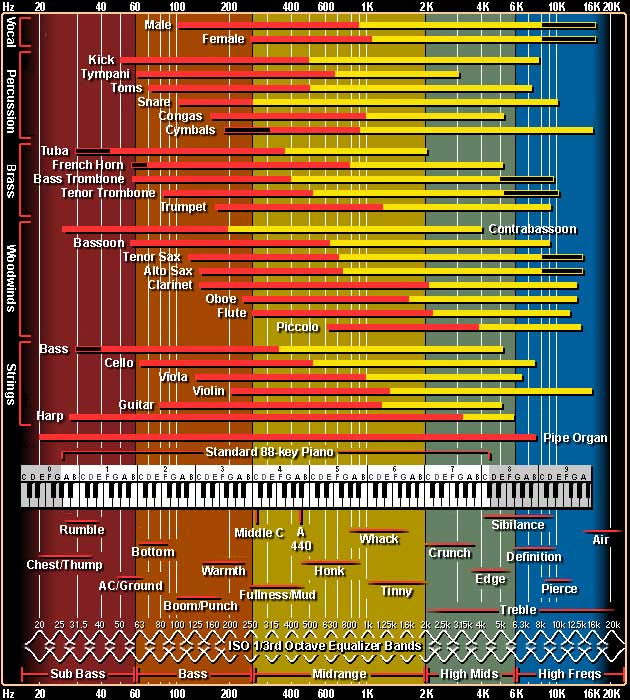
source http://www.freestompboxes.org/download/file.php?id=18471&mode=view
-
GAGA and the Wet Dry Wet Rig, by Dave Garfinkle
"Recently I wanted to join the ranks of those who play their effects signal separately from their main signal, the benefits include a better control of the volume of the two signals as well as a huge sound stage..."
- On the Fallacy of "Limited Bandwidth" in Guitar Amplification
-
How Loading And Cables Affect Your Sound And What To Do About It by Howard Davis
Article clearly describes impedance and cable loading effects; a must-read for guitarists. -
Guitar Effects Pedals - Descriptions, Operations by Howard Davis
Details what guitar effects are and how guitar effects pedals operate; another must-read for guitarists. -
Wattage, Power, Speaker Efficiency by Howard Davis
Useful information about power levels, technical specifications, and what it all means: perceived loudness and sound quality. -
All About Bypass by Howard Davis
Straightforward article covers definitions and features of various types of guitar pedal bypass schemes. p3dals.com pedals incorporate the "total bypass" ("true bypass") scheme described in this article. - Frank Zappa on Tone, Color and Timbre -- "You seem to be the only rock personality interested in modernist ... Stravisnky. How do you see--what do you think of their elements? How can you use them?" FZ: "Well, see, I'm not the only person who might be interested in Stravinsky. There might be some others in rock now who are interested in that kind of music, but I believe I was the first one to bring those composers to the attention of the young record-buying public. The thing that I enjoy about those composers is the harmonic language is a lot more interesting than the normal harmonic language that is used in pop music. You know how Rock and Roll is constructed? You get a guy with a guitar, see? And he knows -- if he's starting -- he knows one, two or maybe three chords. If he's been playing for a few years, he knows ten, twenty, maybe thirty chords. The chords themselves are not interesting because they're standard positions that you put your hand in on the guitar. When songs are made up out of standard things like that, they will tend to sound repetitive; they'll always [sound] the same. So if you're writing for a group of instruments, and each person in that group gets to play one note of a chord, that gives you the chance to make the chord any density that you like. You can only do that by working with many instruments and different tone colors, and so that's what I've come to appreciate ... is the tone colors and the voicings of the chords." --Frank Zappa on youtube
-
Malcom Moore's technical details on guitar pickups
"Electromagnetic guitar pickups are very poorly understood. This sequential lateral engineering analysis shows how they really work, how to shape the spectrum for any pickup and blows the sales myths beyond reality into figures that are highly predictable... To me, there is absolutely no doubt that body/neck resonance plays a major part of colouring the sound from a stringed musical instrument, if the body has, or is, a resonator, but with a solid body guitar the sound is barely resonant and there is minimum inter-string coupling compared to an hollow/resonator body, and further the fact is that simply holding the instrument considerably damps any resonances in both the body and the neck. ... I am well aware that variations in guitar construction can make differences to the sound, but I am far more acutely aware that subtle differences in sound also start with the construction standards of a pickup - not whether it has been dipped in wax or whatever, but by subtle differences in the coil construction or magnetic circuit can make a profound difference to the sensitivity and spectral response of the pickup. "
- Don Tillman's thorough articles on guitar pickup response, including a java applet that graphs response based on positional parameters.
- Tim Darling's Study of The Edge's (U2) Guitar Delay
-
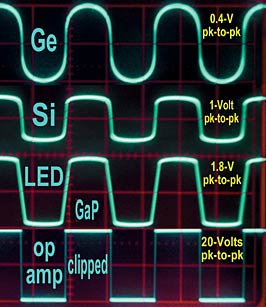
Oscillographs comparing different solid-state distortion characteristic waveforms. Mix Magazine / Eddie Ciletti - Eight guitar amp myths -- How many do you believe? -- "Buying the right amp is one of the most important decisions a guitarist will make."
- Reverb Factory - centuries before there was "reverb" plates and effects...where it all began. (humor)
- Oldest Melody in History - on youtube. ancientlyre.com
- Math and Geometry of Music: Linking Sight and Sound by Daniel Arthur - PDF | archive -- an fascinating and excellent paper discussing the history of musical scales and mathematics and relating them to unlikely topics (healing, architecture). Keywords: Harps, guitars, tuning, fret, Luthier, scales, intonation, Bach, A440, philosophers, Fibonacci, Phi, Pi, Plato, Pythagoras. Paper includes dozens of source documents and websites. "Ancient alphabets were constructed by using visual symbols to represent sounds. Ancient sacred architecture was constructed to send and receive those sounds to and from the gods. Because of that, ancient languages, like Egyptian, Hebrew and Greek were more poetic and musical than our own, with each letter symbol actually representing a specific tone, not just a generic phoneme. ...[Greek texts] can be translated not only into other languages but into musical notes and their related shapes. Likewise, the text of the Hebrew Psalms can be translated directly into the languages of Music and Geometry, which are lost during translation into non-musical alphabets, such as English."
"Many years ago, I asked a luthier (professional instrument maker) how he calculated the placement of the frets on a guitar. He replied, 'A fret is 17.8% of the distance from the bridge to the previous fret,' but he didn't know why. The answer is that frets are placed according to a trigonometric function of the twelfth root of two, the understanding of which takes us into higher mathematics, relative to the study of acoustics, spectral analysis and string theory. This knowledge was not necessary for a monk to string a harp, for a peasant to fret a lute, for King David to build a psaltery, or for me to design a just-intoned guitar."
"Having precise musical ratios and specific notes, in cycles per second, provides the information necessary to construct an instrument. The fret placements are calculated by inverting the fractions and multiplying the length of the string. So, if the string is 25 inches, tuned to A at 440 cycles per second, the interval is 110 and the next note in the chord is C# at 550 cps, so C# has a note ratio of 5/4. The fret is then placed at 4/5 of 25 or 20 inches from the bridge and 5 inches from the nut. This follows another ancient saying, 'As Above, So Below, but Vice-Versa.'"
"The application of ratios in the creation of music and the making of instruments was so prevalent that way back in 325 AD at the Council of Nicaea, the Church banned a specific ratio, known as the 'Devil's Interval.' Also known as the 'Tritone,' it is the ratio of 32/45 or 45/64, in modern notation F/B or B/F. Playing the notes together results in a discordant tone that 'sounds like the devil.'"
"A number of ancient buildings have been constructed to display harmonic proportions in stone. These include the Great Pyramid of Giza, (2500BC) which connects Phi with Pi, aligning it to the sun, moon and stars. The Egyptian Temple of Luxor (1360 BC) is built as a gigantic musical instrument, with advanced knowledge of acoustics, to mix Earth vibrations with the singing of temple worshippers. The Greek Parthenon, (440BC) was designed on the 'Golden Ratio,' which was renamed 'Phi' after its architect, Phidias. The Cathedral at Chartres, France, (1200 AD) also containing the Phi ratio, is one of eighty gothic cathedrals built during the 12th century. Like Luxor, it was designed with harmonic proportions to resonate with the singing of the choir."
"Both the sounds and shapes are purely geometric and, I discovered, have historically been used for meditation and healing. For over ten years I suffered chronic pain in my right side. After numerous tests, no cause or cure was found. I discovered one evening while sitting in a chair playing my guitar that I could feel the vibrations of certain chords traveling from the strings through the wood body into my hipbone and then to the source of the pain in the soft tissues. After strumming a particular six-note chord for about 40 minutes, the pain subsided. Whenever it returned over the next week or two I strummed again until it completely went away. I would have never believed that such a thing could occur had I not experienced it myself. Since then I've discovered several other people who have witnessed a similar phenomenon, including musicologist Don Campbell, who has connected with Marianjoy Rehabilitation Center, in Wheaton, Illinois, to explore the potential of musical healing therapies."
- Sacred Geometry 101 - Golden Mean - Fibonacci - Phi - 1.6180339 and part 2
- Patent Application 20080034942 - The method provides luthiers of fretted instrument with a novel approach for installing frets with increased accuracy. The method is an improvement in calculation of fret placement over the "Rule of 18" because it relies on the length of the vibrating string. This method is more pronounced at the end of the fret board closest to the bridge due to the angle formed by the string when depressed with respect to the axis of the fret board. With respect to the twelve-step octave, the scale length is multiplied by the constant of the twelfth root of 0.5 to calculate the length of the string from fret contact to saddle contact for the next tonal step.
- "Do not place reverb before other effects in a chain, as doing so will add reverb to every subsequent effect -- which tends to sound unpleasant. Do not place overdrive and/or distortion at the end of the chain." --David M. Brewster, "Introduction to Guitar Tone and Effects", page 41
- "Today musicians and sound/studio engineers collectively spend millions on high-dollar rack units and processing gear in order to perfect the quality and clarity of their reverb signals." --David M. Brewster, "Introduction to Guitar Tone and Effects", page 32
- "When measuring along the line of the strings, single coil pickups are sensitive for about 10 mm either side of the centre of the pole pieces. For lateral hum bucker pickups, this sensitivity follows a similar pattern also extending about 10 mm past the nearest pole pieces with a flat sensitivity between the two pole-piece arrays. The sensitivity across the strings is virtually flat with the exception of the outer two pole-pieces, which are relatively about 4 dB down. So the pole pieces do not need to be directly under the strings, but extend out beyond the strings to get a more even relative response." --Malcolm Moore's research into guitar pickups, particularly regarding Single Coil and various Humbucker arrangements and their magnetic fields. (2010-10-23)
- Menno van der Veen presented at AES 118 this paper, which details a universal audio output transformer system that "includes all possible variations in topologies. The system contains 90 variations (at least) and some of them have never been constructed until now." It's interesting because it shows once again, along with good technical discussion, that with audio output transformers there are, inescapably, many variables, possibilities and trade-offs, none of them audibly or picture perfect. http://www.mennovanderveen.nl/nl/download/download_3.pdf ( archive ). Compare this with patented ZOTL Technology in GAGA, which does actually provide picture-perfect response without compromise.
- Summarily paraphrasing Menno van der Veen's Low Level Details in Output Transformers research paper (presented at AES 122, May 2007 -- PDF, archive ): Failing to accurately transfer fine details, traditional audio output transformers act as nonlinear filters that obliterate the naturalness, purity and original intent of music played through them.
- Related research ( PDF, archive ) by Menno van der Veen describes a piezo / mechanical flexing mechanism by which capacitors exhibit audible distortions. This research examines scientific basis behind the general wisdom that 'different types of capacitors can sound radically different.'
- Larry Klein's interesting AudioXpress article, "How Loud is Real" ( PDF ) which details the Fletcher-Munson curves, loudness of natural sounds, and how humans perceive audible power.
- Note Chart listing fret, note, frequency at A440 standard tuning (per Merlin Blencowe):
Tube Cross Reference
Vacuum Tube and Guitar and Bass Amplifier Servicing By Tino Zottola -- Page 63, Table 6
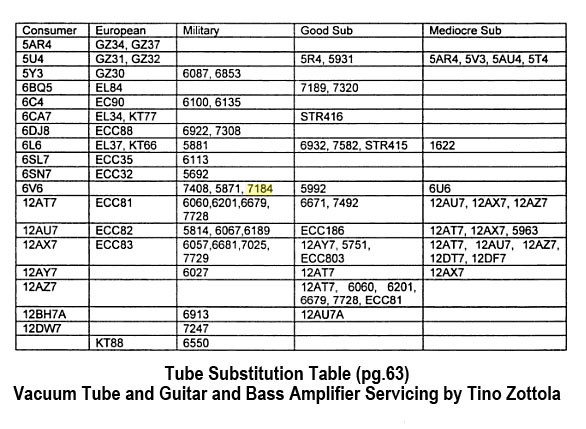
| Consumer | European | Military | Good Sub | Mediocre Sub |
| 5AR4 | GZ34, GZ37 | |||
| 5U4 | GZ31, GZ32 | 5R4, 5931 | 5AR4, 5V3, 5AU4, 5T4 | |
| 5Y3 | GZ30 | 6087, 6853 | ||
| 6BQ5 | EL84 | 7189, 7320 | ||
| 6C4 | EC90 | 6100, 6135 | ||
| 6CA7 | EL34, KT77 | STR416 | ||
| 6DJ8 | ECC88 | 6922, 7308 | ||
| 6L6 | EL37, KT66 | 5881 | 6932, 7582, STR415 | 1622 |
| 6SL7 | ECC35 | 6113 | ||
| 6SN7 | ECC32 | 5692 | ||
| 6V6 | 7408, 5871, 7184 | 5992 | 6U6 | |
| 12AT7 | ECC81 | 6060, 6201, 6679, 7728 | 6671, 7492 | 12AU7, 12AX7, 12AZ7 |
| 12AU7 | ECC82 | 5814, 6067, 6189 | ECC186 | 12AT7, 12AX7, 5963 |
| 12AX7 | ECC83 | 6057, 6681, 7025, 7729 | 12AY7, 5751, ECC803 | 12AT7, 12AU7, 12AZ7, 12DT7, 12DF7 |
| 12AY7 | 6027 | 12AT7 | 12AX7 | |
| 12AZ7 | 12AT7, 6060, 62301, 6679, 7728, ECC81 | |||
| 12BH7A | 6913 | 12AU7A | ||
| 12DW7 | 7247 | |||
| KT88 | 6550 |
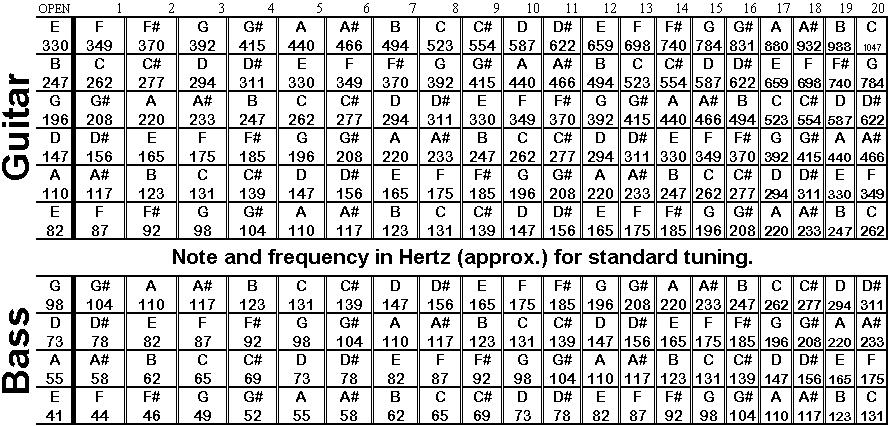
-
The 'Best Amp' is unique, not yours, and you wouldn't trade for it? -- Ken Fischer (Trainwreck Amp), 2005: "...there isn't a "correct" Trainwreck schematic. Commonly I would change things from amp to amp to suit the buyers style and guitars. Also, it is very common for me to build one of a kind, or two of a kind amp designs. I'd also "hot rod" my standard models just for fun...Once I had a tune up "clinic" at my place with six Express amp owners. We did a secret vote on our personal favorite out of the six. Keep in mind that of course I had built all six. The one I picked as best wasn't picked as best by anyone else! Boy, did that make me a dummy! Nobody picked their own amp as best! Two guys picked each others amp as best but refused to trade when I suggested it." ampgarage | archive
- "Oh man. Wow. I saw them do this that night on TV. I was 13. The next week, I bought a Flying V with my paper route money and played that thing every day and night for the next five years. I sang lead in bands. I moved to LA. I got signed. I lived my dream. I went broke. I went into? advertising. And I loved it, I would do it all over again! If you are young, take my advice and play your guitar and don't let anything stop you. Life is for living!" youtube
- Adrian Belew: History & Future of Guitar Noise "You shouldn't really be trying to sound like Jimi Hendrix, by now anyway. That's been done." 9:44 in.
- Strength comes from argument. You have to fight your space. Songs get fine-tuned by that. 1:27:00 into Queen docu
- Humans are amazingly susceptible to hearing what we expect to hear and have an auditory memory that lasts only a couple of minutes. ... To a certain degree, we are people who, if presented with a beautiful landscape, might focus on the quality of the glass in the window we are looking out of, or if examining the framing of a house, on the quality of the hammer used to drive a nail into a 2X4 without leaving a mark on the face of the wood. In advanced cases, as we get closer and closer to "perfection" we often develop our focus to a degree that we are prone to looking at increasingly obscure portions of the big picture: what was once a minute, barely audible defect becomes all that we hear. If only one record in our collection makes our woofers fart or if our intonation on the 19th fret of the sixth string is off by a couple of cents, we'll lie awake at night pondering ways to fix it. Only our spouses or therapists (bankers?) can determine when we cross the line into obsession here. You'll notice I use the term "we" here, I'm not just accusing others as having an active neurosis or unhealthy fixation on inanimate objects. Any man who owns a dozen guitars and five amplifiers can't really point fingers. We're apt to attach some degree of mysticism to any endeavor we don't fully understand via "scientific" means. At this stage of the game, science isn't even sure why music exists and why we derive so much pleasure from it. Working backwards from that standpoint, we're not all that sure how to measure what human beings actually hear and absorb while listening to music. Therein lies a lot of the "fun". fauxsuper
- Savart Journal - science and technology of stringed musical instruments
- Modeling and Optimizing of the First Guitar Mode - Samo Sali
- Parameter Estimation of Multiple Non-Linear Damping Sources in Guitar Strings - Jonathan Wesley Christian
- Initial Behavior of Nylon Guitar Strings - Richard Mark French, Debbie French, Craig Zehrung
"Players have known about some of the quirks of nylon guitar strings since their introduction after WWII. In particular, new strings tend to decrease in frequency and need to be re-tuned repeatedly in the first few days of use as they stretch. This paper presents data on new strings in which the tension is held constant and the string length is allowed to vary - essentially the reverse of the condition on the guitar where the length is held fixed and the tension changes. The frequencies of monofilament nylon strings were observed to vary cyclically. This effect is not clearly explained by common expressions for resonant frequencies of stretched strings and may require a more sophisticated model for nylon strings under tension."
- "... I've noticed that I eventually tire of most of the digital guitar toys I've purchased over the years, time and time returning to a fully analog signal chain." - faux
- Several excellent articles by David Cherubim include Magickal, alchemical, occult and historical information on the Guitar
"Guitar playing is a Spiritual Art, for it is a musickal form of both Magick and Alchemy. It is a creative manipulation of the Elements of Nature and an artistic transmutation of Universal Forces through the skillful use of the hands and sound. It effects changes in both the player and the listener. With a proper understanding of both the technical and spiritual aspects of playing the Guitar, one is able to use the Guitar as an efficient instrument of the Will to create internal and external changes. The Guitar has its own Science, both conventional and unconventional in kind...
...
"Now the Guitar in its fundamental form is in the shape of a woman's body. This is significant from both the Occult and Psychological point-of-view. For Woman represents the Psyche or Soul of Nature, and the Guitar therefore symbolizes this same Divine Principle, called Neschamah in the Esoteric Science of the Qabalah. Neschamah, or the Universal Soul, pertains to the third Sephira called Binah (Understanding) on the Tree of Life in the Spiritual Wisdom of the Qabalah. This is the Sephira of the Goddess BABALON, who is the Divine Archetype of Woman in Magickal Philosophy. The Guitar is the musical symbol of BABALON.
"The Guitar is a Weapon of Musick for the Goddess BABALON. It is a Mystical Axe, a Divine Bow, a Spiritual Sword, and a Magickal Gun, but the only bullets fired from this gun are nirvanic sounds of Musick to which we are all defenseless. No one can escape the beauty and majesty and mystery of the melodies and harmonies and colors of Guitar Musick. We can all be penetrated and entranced by a Guitar song. It is the perfect musical instrument, capable of penetrating the very Soul of us all.
...
"Historically, the first form of the Guitar dates back to ancient Babylonia, but the actual roots of the Guitar (as we know it today) are in Spain, and it is an evolution of other stringed instruments from other parts of the world. In A.D. 711 the Moors (Dark Muslims) invaded Spain from North Africa bringing with them a stringed instrument which, after being integrated with other similar stringed instruments, developed into the classical Guitar (as we know it today) during the 19th Century. The classical Guitar - and its consequent classical sounds - is the foundation of the Spirit of the Guitar.
"From the classical Guitar developed the acoustic folk Guitar which became an integral part of the Musick of the African American Blues players (Blues is the primary core of Rock 'n' Roll or Rock Musick) during the early part of the 20th Century. Then, born out of the mother of necessity, the acoustic Guitar transformed into the revolutionary invention of the Electric Guitar. And the Electric Guitar became the very essence and driving force of 20th Century Musick, which it continually defined and redefined, and it continues to do so into our own apocalyptic 21st Century. It gave to all of us a whole new form and era of Musick and it has now become the most played instrument in the world.
"There is a collective, magickal and spiritual significance attached to the Electric Guitar. For the Spiritual Guitarist, it is the numinous Instrument of Lucifer, the Hammer of Thor, the Thunderbolt of Zeus, the Caduceus of Hermes, the Sword of the Warrior, the Stone of the Philosophers, and the Wand of the Magician. It has become the major Weapon of Sound in Musick and a dynamic symbol for the Spirit of Freedom and Independence since around the middle of the 20th Century, and it will continue to do so into the future!
...
"Now there are twenty-two frets on the Electric Guitar (not including the so-called open fret), and these may be linked with the twenty-two Trumps or Atus from the Book of Thoth (22 Major Arcana of Tarot or the Tarot Cards 0-XXI) and the twenty-two Paths on the Qabalistic Tree of Life which symbolize the Elemental, Astrological and Planetary Forces of the Universe. It should also be noted that in Occult Numerology the number twenty-two represents the Circle of Infinity. The mystical fretboard of the Electric Guitar can be compared to a Circle of Infinity, containing as it does a variety of sounds which may be manipulated in a variety of ways to produce an infinite variety of Musick.
"The Guitar has six strings in all. Six is the sacred number of the Sun who, in Greek Mythology, was represented by Apollo, the Greek God of Musick and Poetry. The first type of Guitar (Lyre) created by Hermes was given to Apollo who then became a Master of the instrument and it also became one of his sacred symbols. Now in magickal symbolism the Sun is primarily a masculine or Male Force, thus the Guitar, though it has the body of a female and represents the feminine or Female Force (the Moon), it also, by extension of the Six Strings, contains within itself the Male Force, as Yin contains Yang in the Oriental Philosophy, or as the Neschamah of the Qabalah contains the Chiah. The Guitar proper is both the body and the strings of the instrument. Without the strings, the body of the Guitar can produce no Musick. Also, note in this connection the phallic shape of the Guitar neck upon which the hand moves up and down; it is a masculine symbol attached to and united with a feminine form (the Guitar body). The Guitar proper is both Yin and Yang, Female and Male, Moon and Sun, Darkness and Light, and so on down the list of Complementary Forces. It is the unity of these two essential parts of the Guitar that makes Musick!
"There are seven Natural Tones or Notes in Musick and, with the five Sharps and Flats (the so-called Accidental Notes), we have Twelve Tones in all that we can play in various positions and octaves on the Guitar. Both the numbers, seven and twelve, have great significance in Magick, Alchemy, Astrology, the Qabalah, Yoga, and in other Esoteric Systems and Philosophies and Religions. They are universally sacred numbers and they cover a lot of divine ground. But for now, regarding the seven Natural Tones (A, B, C, D, E, F and G), it should be noted that they correspond with the seven Colors of the Spectrum, the seven Chakras of Yoga, the seven Metals of Alchemy, and with the Sun, Moon, and the Planets Mercury, Venus, Mars, Jupiter and Saturn. (The five Sharps and Flats [A#/Bb, C#/Db, D#/Eb, F#/Gb and G#/Ab] correspond with the five Elements of Fire, Water, Air, Earth, and Spirit.) Also, in all, the twelve tones correspond with the twelve Zodiacal Signs of Astrology (Aries, Taurus, Gemini, Cancer, Leo, Virgo, Libra, Scorpio, Sagittarius, Capricorn, Aquarius, and Pisces) which, like the Sun, Moon and Planets, represent Spiritual Forces of Nature. Playing any of the twelve notes on the Guitar, melodically or harmonically, is a musickal invocation of the mystical colors and spiritual energies of the Sun, Moon and Planets, and the Astrological and Elemental Forces of Nature.
...
"Guitar playing can also be linked with certain principles in the Martial Arts, which is more than a physical art form, but also a Spiritual Philosophy for the true Warrior. This includes, more so than most realize, the Art of Karate. Let us, for example, consider the Ki and Kata. The sounds produced from the Guitar are a projection of the Ki of the guitarist. Ki is the Energy of the Soul and the Soundless Sound within the guitarist, the actual spiritual source of the Musick that s/he projects. Ki can also be defined (and realized) as "feeling" and "spirit" or, in more musickal terms, "expression" or "emotion." (Emotion is a state of feeling.) Learning to properly play on the Guitar fretboard is primarily the result of learning to effectively play the Scales and Chords of Musick on the Guitar with feeling, spirit, expression or emotion. The Scales and Chords are similar to the Kata (Martial Arts Ritual) done with the hand and fingers. The enemy is, of course, none other than the self. (The real enemy is within.) And the weapon of the guitarist is his or her Guitar which is primarily mastered through the Guitar Kata (Scales and Chords). The Martial Arts is "Moving Zen" or Active Meditation. The same is true when playing the Guitar. As every experienced guitarist will testify, playing the Guitar is a meditation or act of Yoga unto itself, one in which both subject and object disappear from consciousness, and Musick is the result. (I refer you to the book, "Zen Guitar," by Philip Toshio Sudo, which will give you a more expanded view point of the metaphorical relationships between Guitar playing and the Martial Arts. This book is one of a kind and worth every penny you will pay for it.)
"Lastly, Musick is a spiritual, mystical and magickal art form. It originated as such and slowly developed through time into a theoretical and technical Science. As with any art form thus developed, it lost a large portion of its spiritual orientation and has become, for the most part, a rather mundane art form practiced by unenlightened folk. But the Scales of Karma must be balanced: the spiritual aspect of Musick must arise from the darkness, and Musick will become more of what it is intended to be, that is a creative means for the Universal Spirit to express itself and a powerful means for humanity to invoke and receive the divine Guidance and Illumination of the Spirit, and it will naturally become a Way to Enlightenment itself for both the inner and outer circles of men and women. Magick and music will once again combine, becoming one, and humanity will be raised higher on the Mystic Mountain of Illumination. The main musickal instrument in this spiritual evolutionary process will prove to be the Guitar, as it has already proven itself to be in the past couple of decades. Many yet unknown effects and means for playing the Guitar will manifest in the future by Magicians and Alchemists and Wizards and Warriors of the Guitar, adding to its already existing vast treasure house of unique and powerful sound, and it will come to be recognized as one of the greatest weapons and instruments of power in the shaping of the New Age of Freedom that is now upon us!"
- Guild of American Luthiers
- Story of the Guitar 1
- Story of the Guitar 2
In 1916, Hawaiin music albums were outselling all others in the USA.
- Freeman Fly (interview on Red Ice Creations) about Occult History of Television and visual media -- Thule Society, Telefunken, and much, much more -- Demons transmitted via television, music -- http://www.youtube.com/watch?v=ziDcmVLgS0A
- Maurice Cotterell "...will clear your mind of all the nonsense that you've been given over the past [many] years. ...if you wish to progress in science you must get rid of all this pollution in your mind..." He seems to epitomize applied engineering and understanding, linked here in the interests of increasing understanding of our world and the human condition. "Human beings [exist] to purify their spiritual voltage." Particularly with regard to sound quality and tone, we agree that it's generally 'all about purity.' Corollary to this is how music sounds generally "better" at certain times.
- Fantastic Coast-to-Coast interview regarding sun spot cycles, spirituality, evolution, reproduction, astrology, 2012 and much, much more. YouTube: 1 2 3 4 5 6 7 8 9 10 11 12
- Secrets of the Supergods presentation. The cause of astrology: How the sun's cycles and radition results in twelve types of effects, leading directly to the twelve aspects of astrology. Sun signs "directly affect how you behave." Connects scientific discoveries to explain what's been going on throughout history.
- Mayan Science Youtube: 1 2
- RedIce interview about his book "FUTURE SCIENCE" which "explains several topics such as how electricity and magnetism work together to produce the force of gravity, why the atom is comprised of 8 orbital shells, the nature of so-called 'dark matter', the reason why spiral galaxies are spiral shaped, why the centre of the Earth is red-hot, and how the Earth's magnetic field is generated. These are some of the topics we'll discuss with Maurice in this interview. He'll begin talking about the need for holistic science that incorporates engineering, chemistry, physics, history, spirituality, etc. and talk about the "God within us" that allows us to figure things out. He'll tell us why CERN is a waste of money and time. Additionally, Maurice will talk about the Sun, its cycles, its effect on fertility, how it causes global-warming-and-global-cooling and its relationship to Mercury. Maurice will also tell us why the magnetic poles won't be flipping anytime soon and will dispel the myth about 2012." See also Coast-to-Coast Interview.
- Fantastic interview with Maurice Cotterell regarding cutting edge aspects of electromagnetic energy and the book FUTURESCIENCE.
- MIT Lectures: Electricity & Magnetism 8.02 "...so this instrument is not without danger, but that of course makes it more exciting to work with. ... Even though our immediate surroundings are dominated by electric forces, the behavior of the universe on a large scale is dictated by gravity. [42:00]" intro
- Aluminum transformers? "I have heard that Aluminum can be made to function as a ferromagnetic material." -- William Lyne interview, Tesla, zero-point energy, primary solar rays, rocketry, propulsion, gravity, aurora, space flight, high energy physics, microwaves, HAARP, submarine propulsion, and much more youtube. Lyne has doggedly researched Tesla and related technologies, written several books. Other characters with related, high-energy interests: Bernard Eastlund, Dr. Judy Wood, John Hutchison (Hutchison Effect).
- "Actually, the exact half of the length of a guitar string (the 1st harmonic) is the 12th fret's upper fret wire, and what is termed the 'base' frequency in this video is called the 'fundamental' in music. An interesting side note: W. Carlos, who produced "Switched On Bach", also put out original compositions that had the upper 6 harmonics in just the correct juxtaposition to induce the mind to 'hear' a fundamental pitch that was actually lower than the range of human hearing" - Cuttingthruthefog of this video showing Hutchison Effect. Switched on Bach is a musical album by Walter Carlos and Benjamin Folkman, produced by Carlos and Rachel Elkind and released in March of 1968 by Columbia Masterworks Records. It played a key role in popularizing classical music performed on electronic synthesizers, which had until then been relegated to experimental and "pop" music. This fostered a significant increase in interest in electronically rendered music in general, and the Moog synthesizer in particular...[Bob] Moog gave a paper at the annual Audio Engineering Society conference, where he played one of Carlos' completed recordings: "At the end of the talk I said to this fairly big audience, 'As an example of multi-track electronic music studio composition technique, I would like to play an excerpt of a record that's about to be released of some music by Bach.' It was the last movement of Walter's Brandenburg No. 3. I walked off the stage and went to the back of the auditorium while people were listening, and I could feel it in the air. They were jumping out of their skins. These technical people were involved in so much flim-flam, so much shoddy, opportunistic stuff, and here was something that was just impeccably done and had obvious musical content and was totally innovative. The tape got a standing ovation. CBS had no idea what they had in Switched-On Bach. When it came out, they lumped it in at a studio press party for Terry Riley's In C and an abysmal record called Rock and Other Four Letter Words. Carlos was angered by this, so he refused to come. So CBS, frantic to have some representation, asked me to demonstrate the synthesizer. I remember there was a nice big bowl of joints on top of the mixing console, and Terry Riley was there in his white Jesus suit, up on a pedestal, playing live on a Farfisa electronic organ against a backup of tape delays. Rock and Other Four Letter Words went on to sell a few thousand records. In C sold a few tens of thousands. Switched-On Bach sold over a million, and just keeps going on and on."
- Astronaut Edgar Mitchell's Institute of Noetic Sciences - "The word Noetic refers to 'inner understanding,' a kind of intuitive consciousness - direct and immediate access to knowledge beyond what's obtainable to our normal senses. Noetic Science refers to research which applies a scientific lens to the study of subjective experience and to ways that consciousness may influence the physical world. It explores the 'inner cosmos' of the mind (consciousness, soul, spirit) and how it relates to the 'outer cosmos'. In other words, it explores how people come to know things or affect things that have no apparent rational explanation by studying such experiences and inner capacities as intuitions, psi, 'after-death' communication, and personal transformations. It then explores what its findings suggest about the nature of human consciousness.
- Princeton's Global Consciousness Project - "The Global Consciousness Project, also called the EGG Project, is an international, multidisciplinary collaboration of scientists, engineers, artists and others. We collect data continuously from a global network of physical random number generators located in 65 host sites around the world. The archive contains more than 10 years of random data in parallel sequences of synchronized 200-bit trials every second. Our purpose is to examine subtle correlations that may reflect the presence and activity of consciousness in the world. We predict structure in what should be random data, associated with major global events. When millions of us share intentions and emotions the GCP/EGG network data show meaningful departures from expectation. This is a powerful finding based in solid science. Subtle but real effects of consciousness are important scientifically, but their real power is more direct. They encourage us to help make essential, healthy changes in the great systems that dominate our world. Large scale group consciousness has effects in the physical world. Knowing this, we can use our full capacities for creative movement toward a conscious future.
- Investigative Mythologist William Henry explores interesting, esoteric meanings embedded in various locations and pursuits, particularly Washington DC, Nashville TN, and the CERN project.
- Demonstrates the unbelievable power of subliminal suggestion. Could this explain the emphasis on "back masking" in music? Hiding subliminal messages in advertising? If you don't believe any of that works on you, watch how it works on this guy, and then see the surprising revelation of technique at the end, particularly the blonde guy with his secret present and also the school teacher and her students. video
- LENR CANR
- Curious about PicoTesla at 1 Hertz? Tokyo University magnetometer, via HAARP, monitors subsonic magnetic variations on Earth: "...waves in the frequency range from 0.1 Hz to 3 Hz...are the result of ion-cyclotron radiation generated near the equatorial plane of the outer-magnetosphere that make their way to the ionosphere guided by the magnetic lines of force. In addition, signals generated in the atmosphere that are caused by lightning discharges, the Schuman resonances, are also detected and sometimes become strong enough to mask signals from the ionosphere."
- Dr. Eugene Mallove 2004 interview on alternative energy. infinite-energy.com "The interview that convinced me"
- Why men can "tune out" women: A study published in the journal NeuroImage -- researchers found that there are major differences in the way male and female brains process voice sounds. Different brain regions are activated in men, depending on whether they're hearing a male or female voice. Apparently, the timbre (character) of women's voices makes it harder for men's brains to decipher female speech. When it comes to processing a woman's voice, men's brains use the more complex auditory parts that process music, not human voices. [This is interesting in light of research which reveals past languages were actually more sing-song than monotonically spoken.] But men in the study could easily hear and understand other men's voices as speech because that process uses a simpler mechanism at the back of the brain. Women: speak slowly and get to your point fast. ref
- Geet Reactor: "Many times the mileage." and rebuke. Mentions John Hutchison's technology being used to clean gulf water of BP oil. Also mentions Rossi / Focardi "e-cat": Italian Cold Fusion (Nickel-Hydrogen Fusion reactor, 10kW of thermal energy output from 400W input, or 8x over unity) and gives good historical backgrounder.
- What when the most fundamental theories do not account for all measurements? Theory must be wrong. What if anyone can quickly and easily demonstrate the anomaly, in a two-thermometer experiement? "This report presents conclusive evidence for the claims of [Wilhelm] Reich regarding the verifiability of the thermal anomaly which he discovered in simple metal boxes, and magnified in special boxes (which he termed Orgone accumulators, or simply ORAC) composed of alternate dielectric and metal layers...in the present communication we aim instead at measuring it under limit conditions when, by all accounts, it should disappear. This is what is known as the Reich-Einstein experiment. We found we were able to experimentally verify the thermal anomaly reported by Reich..." »
-
A Nonlinear History of Radio (local archive PDF)
"Integrated circuit engineers have the luxury of taking for granted that the incremental cost of a transistor is essentially zero, and this has led to the high-device-count circuits that are common today. Of course, this situation is a relatively recent development; during most of the history of electronics, the economics of circuit design were the inverse of what they are today. It really wasn't all that long ago when an engineer was forced by the relatively high cost of active devices to try to get blood (or at least rectification) from a stone. And it is indeed remarkable just how much performance radio pioneers were able to squeeze out of just a handful of components. For example, we'll see how American radio genius Edwin Armstrong devised circuits in the early 1920's that trade log of gain for bandwidth, contrary to the conventional wisdom that gain and bandwidth should trade off more or less directly. And we'll see that at the same time Armstrong was developing those circuits, self-taught Soviet radio engineer Oleg Losev was experimenting with blue LEDs and constructing completely solid-state radios that functioned up to 5MHz, a quarter century before the transistor was invented. These fascinating stories are rarely told because they tend to fall into the cracks between history and engineering curricula. Somebody ought to tell these stories, though, since in so doing, many commonly-asked questions get answered automatically. This highly nonlinear history of radio touches brie?y on just some of the main stories, and provides pointers to the literature for those who want to probe further.
Interesting, relates to "Orgone" energy, generator? "For his radio experiments Marconi simply copied Hertz's transmitter and tinkered like crazy with the sole intent to use the system for wireless communication (and not incidentally to make a lot of money in the process). Recognizing the inherent limitations of Hertz's spark-gap detector, he instead used a bizarre creation that had been developed by Edouard Branly in 1890. As seen in Figure 1 the device, dubbed the "coherer" by Sir Oliver Lodge, consisted of a glass enclosure filled with a loosely packed, perhaps slightly oxidized metallic powder, whose resistance turned out to have interesting hysteretic behavior. Now, it must be emphasized that the detailed principles that underlay the operation of coherers have never been satisfactorily elucidated. Nevertheless, we can certainly describe its behavior, even if we don't fully understand all the details of how it worked. Under large-signal excitation, the filings could be seen to stick together (hence the name "coherer"), and it's not hard to understand the drop in resistance in that case. However, apparently unknown to most authors, the coherer also worked with input energies so small that no such "coherence" is observed, so I assert that the detailed principles of operation remain unknown. A coherer's resistance generally had a large value (say, megohms) in its quiescent state, and then dropped orders of magnitude (to kilohms or less) after an EM wave impinged on it. This large resistance change was usually used to trigger a solenoid to produce an audible click, as well as to ink a paper tape for a permanent record of the received signal. To prepare the coherer for the next EM pulse, it had to be shaken or whacked to restore the "incoherent" high resistance state."
- "When you can measure what you are speaking about, and express it in numbers, you know something about it..." --Lord Kelvin
- "No musical trend has ever survived unless you can dress up to it. All the important musical trends were accompanied by clothing trends to go along with the music." - Frank Zappa, 3:00 into video
- The Earth's Schumann Resonance is 7.83 Hz. With a wavelength equal to the Earth's circumference, this resonance is said to be excited by lightning strikes which cause an infrasonic rumble. The frequency of Middle C (256.39 Hz) is the 33rd harmonic (32nd overtone), esoterically linking music, humanity and Earth. 11:30 into the highly interesting and esoteric "Secrets in Plain Sight" http://www.youtube.com/watch?v=L777RhL_Fz4. To within one foot, the latitude of the exact center of the Grand Gallery, inside Giza's Great Pyramid, is 29.9792458 degree north of Earth's equator. The speed of light is 299,797,458 meters / second. Notice anything? (1:14:00 in). See also revelatory work in CARL MUNCK's THE CODE. Don't miss the Pyramid Math as it applies to Cydonia on Mars (start with the 5 minute hook).
- Dr. Bob Beck offers interesting information regarding medical treatments and one-half the Schumann Resonance. Search his youtube videos.
- Isn't this interesting: John Searl - Searl Effect Generator
- Everyone's future depends on crucial developments in energy: Top 5 energy technologies, in particular the reportedly amazing Rossi E-CAT. See the one-stop source for new energy news -- peswiki.com
- "One single force that is threatening liberty is ignorance. The second is thinking of ourselves as economic units, not as spiritual beings. America is not an actuality, but it's a potentiality. We have to remember that the Universe is not going to be seeing somebody like you again in its entire history of creation. So it's up to you to become a dot, a paragraph, a page, a book, in the history of creation."
- "The older people all want to know how it does what it does, but the young people just want to know what it can do." - Steve Jobs, Sean Lennon, 20:00 into interview.
- "The people that create...are both the thinker-doer in one person. ...Leonardo [Da Vinci] was the artist, but he also mixed all his own paints. He was a fairly good chemist, knew about pigments, knew about human anatomy, and combining all of those skills together, the art and the science - the thinking and the doing - was what [created] the exceptional result." - Steve Jobs, 37:15 into interview.
- Project Camelot interviews Graham Hancock, Nov 2010 and touches on all kinds of esoteric information, forward and backward. "In our society today, if you want to insult someone you call them a Dreamer. In ancient times, a Dreamer was a highly-regarded role; dreams were understood to be a vital path to true knowledge." Cymatics, sonics, megaliths, neanderthals, red hair, religion, ayuhuasca, pyramids, energy, consciousness, and much more.
- Does one's inner-self allow for "rising above" an outer, negative environment? Zimbardo's Stanford Prison Experiment -- Guard: "That was one of things that surprised me: That the prisoners did so little to support one another after we [guards] started [to] 'divide and conquer.'" -- The earlier Milgram Experiment into obedience of authority showed that a majority of American participants administered life-threatening punishments, as long as there was a perceived 'diffusion of responsibility'. 27:30 in "...none of the 'good' guards ever intervened in the behavior of the guards who gradually became more and more sadistic... We like to think there is this core of human nature, that good people can't do bad things, and that good people will dominate over bad situations. In fact...we put good people in an evil place and we saw who won...the evil place won over the good people."
- "I think randomness and even a little misbehavior is really essential to creative people." - Steve Wozniak, 14:11 into youtube interview
- Study: "...musicians are more likely to collaborate with others from different musical genres." - ABC Science, Oz
- Geometry of Music, Lesson 10, Math of God -- 1:41:00 into Spirit Science. Phi, Fibonacci, Gold Mean, Golden Ratio.
- On GAGA pushing and pulling guitar amplification forward. "When you move forward, sometimes people don't understand..." -- Steve Jobs, 1:50 into interview
- "The more innovative your product, the more resistance you will encounter. You would think that if you had something really great, the world would beat a path to your door. It's not true. In fact, the greater your product or service, the more resistance you will encounter." 31:00 into Guy Kawasaki interview
- KYMATICA - On energy, consciousness, electromagnetism, psyche, creativity, and humanity.
- Faraday, Capacitance, Tesla energy: "Farady felt strongly that action at a distance is not possible thru empty space, or in other words, "matter cannot act where it is not." He considered space pervaded with lines of force. Almost everyone is familiar with the patterns formed by iron filings around a magnet. These filings act as numerous tiny compasses and orientate themselves along the lines of force existing around the poles of the magnet. Experiment has indicated that a magnetic field does possess a fibrous construct. By passing a coil of wire through a strong magnetic field and listening to the coil output in headphones, the experimenter will notice a scraping noise. J. J. Thompson performed further experiments involving the ionization of gases that indicate the field is not continuous but fibrous electricity and matter, (1906)." - Eric Dollard
- Dan Winter explains the benefits of the 'greatest number of harmonics.' (~44minutes) He proposes fractality as prerequisite for life and transcendence. Twinkle in eye. "Orbs are actually a phase-conjugate plasma domain, trying to sustain life." Love, DNA braiding, coherent heart harmonics, vibration. Here's more on music (vibration) as bliss, spirituality and consciousness. Bioacoustic habitat theory - "Gorillas in the Mix" CD.
- Purity is the necessary first step in the Tree of Life, esoteric teachings and ancient mystery schools, as related by no less than Manly P. Hall. The next step is communication and intelligence. The next step is emotion, affection, beauty, love, sincerity, truth, the sublime.
- "Celebrity is about a lot of people loving you from a distance." - Amanda Palmer, http://youtube.com/watch?v=xMj_P_6H69g
- Fractality and Life - Dan Winter
- "There isn't really any competition unless we make it for ourselves; instead of competing all we have to do is create." 4:20 into http://youtube.com/watch?v=tgGBcSp4Huo
- Derren Brown - Orchestral Mind Control - Mentally controlling the dynamic, communication through music, energy, vibration, morphogenics.
- Michael Tsarion - Tyranny, Music, Muse, and Mysterium
- Jemma King: Soundscape, Mind Control and Phenology of Music - Parts 1, 2, 3, 4 - Fascinating - Dr. John Coleman, Alan Watt, Frankfurt School, Rockefeller, Tavistock Institute, Theodor Adorno, The Beatles, 12 tone atonal system -- Theodor Adorno owned all the copyright to The Beatles' music (music and lyrics) until Michael Jackson purchsed it. The Rolling Stones. Hip Hop. Subconscious programming. Monarch program. "Corrosive effects on the mind." Mass social manipulation. See also MUSICAL CULT CONTROL by Dr. Leonard Horowitz, and the INSIDE THE LC series by Dave McGowan. This is an immensely interesting interview concerning esoteric, mostly occult information.
- Theodor W. Adorno (1903-1969), one of the principal figures associated with the Frankfurt School, wrote extensively on culture, modernity, aesthetics, literature, and -- more than any other subject -- music. To this day, Adorno remains the single most influential contributor to the development of qualitative musical sociology which, together with his nuanced intertextual readings of musical works, gives him broad claim as a continuing force in the study of music. This long-awaited collection of twenty-seven essays represents the full range of Adorno's music writing. Nearly half of the essays appear in English for the first time; all of the essays are fully annotated; and the previously translated essays have been corrected and missing text restored, making this volume the definitive resource on Adorno's musical thought. amazon
- Musical scale encoded into architecture of Temple at Luxor, Egypt - John Anthony West video // Golden Ratio (1.618...) :: ( ( ( 1+ sqrt( 5 ) ) / 2 )Temple itself built to ratio of human body. Vibration effects. Musicology. Architecture. Chaladny. Sonics. Resonance. Cymatics (science of waveforms). Creation is associated with vibration - the world is sung into existence by the spirits. Relationship between frequency and form. ...frequency creating form out of chaos among small particles. "Architecture is frozen music." // "Music is a higher revelation than philosophy." - Beethoven // "Everything owes its existence, solely and completely, to [vibration]." - Dr. Hans Jenny
- Bosnian Pyramid Updates March 2013 - First pyramids in Europe. Biggest pyramids (yet found) on Earth. Most precise placement on Earth. Best quality concrete on Earth. Oldest on Earth. Focused Tesla energy beam located atop pyramid.
- David Wilcock discusses levitation of heavy objects by sound waves, pyramid technologies, archao-geology, and other ancient mysteries. Dec 2010
- The Bohlen-Pierce Scale is a chromatic scale whose tones are separated by the 13th root of 3. A chromatic scale is one where all notes are in a series with fixed tempered intervals. Study shows that the decision regarding consonance and dissonance using the Bohlen-Pierce scale is, in part, a function of musical training.
- Audio as a convenient form of magic, and the demise of component systems and mid-level audio:
"Indeed, the days of the old-fashioned component stereo system are pretty much over", says Alan Penchansky, an audiophile and former columnist for the music trade publication Billboard. "What's happened in the marketplace, the midmarket for audio has completely been obliterated," he says. "You have this high-end market that's getting smaller all the time, and then you've got the convenience market, which has taken over -- the MP3s, the Bluetooth devices, playing on laptops." He wishes more people knew what they were missing. At its best, he says, audio reproduction has "a religious aspect." "There's a primacy to audio," he says. "It's a form of magic." ...the history of audio technology has often been one of convenience. cnn
- Good point by Dan Lavry: "...a scope is a 1% (or so) device which is only 40dB measurement accuracy. Even at .1% you have only 60dB. To really see...one needs gear that is far better [than] a scope."
- All your cells are fractal antennae - Brian Thiesen
- Electrosensitivity - Truth About Wireless Tech - By Dr. Magda Havas.
Material herein added and updated constantly; presented for inspirational and educational purposes per Fair Use.
Last modified 6 Mar 2026